$ cat posts/fifteen.md
Fifteen
Table of contents
Without my noticing, this blog turned fifteen.
That’s a long time. Apart from Alejandro Barros’s blog, which started earlier, I don’t know of another Chilean blog this old (if anyone knows of one, let me know).
Despite the irregular schedule, this blog is still alive, still gets visited and linked to, and has a healthy and loyal audience.
I’ve written so many things on this blog that putting together an anthology is hard. Not counting this one, there are 1024 posts (a round number :wink:), but I’ll try to recommend a couple of articles per year:
2005
“Developing software is like making a movie”: the first post on this blog, very short, simple, starting out very timidly.
“Tropically tolerant”: the story of Herman Chinery-Hesse, an African hacker in Ghana. Today he is known as the African Bill Gates (https://en.wikipedia.org/wiki/Herman_Chinery-Hesse).

2006
- “Blogmemes and Meneame, two different systems”: in 2006 I built a site called blogmemes, a sort of shared news aggregator. The site got to more than 50,000 users, but I took it down some time later. There were several similar sites imitating Digg.com, at the height of the blog boom. In Spain there was Meneame, a site created by Ricardo Galli. There was some competition at the beginning and a few comparisons, but I didn’t pursue the idea and BlogMemes was shut down. Meneame is still going: https://www.meneame.net/. Today I read this pair of tweets from Ricardo Galli, creator of Meneame:
- Tenemos que desarrollar más en España y Europa, no podemos dejar el control a Facebook, Twitter, Amazon, Google o Apple
— Ricardo Galli (@gallir) August 1, 2020
Haces algo con lo que puedes pero con bastante éxito
Amenazas, demandas, bulos para desprestigiar...
Vivido personalmente, pesadilla personal, nunca más.
Y lo de bulos no es tontería, crearon foros y hasta un canal en Youtube avisándome de pederastas, enviaron emails a todos los medios con esos enlaces, bloggers y tuiteros famosillos acusándome de permitir y proteger a pederastas... Panda de cretinos.
— Ricardo Galli (@gallir) August 1, 2020
And they reflect the problem of running a social-network kind of site: it eats up a lot of time and effort, and it’s sure to be the target of unfair criticism. Back then I wasn’t up for adding those worries to my life.
- “Wikipedia Man, or the rise of the new pseudo-intellectual pedant”: a pedantic article criticizing pedantry :shrug:
2007
- “Lessons from Ratatouille”: my admiration for Brad Bird and why that is a great movie.

- “Why does software fail?”: this short post has one devastating line: “The truth is that well-made software shouldn’t fail”.
2008
“Technological scatterbrains”: “An atolondrado, a scatterbrain, is someone who acts without thinking, and that’s what we’re turning into when we don’t make the effort to understand what we’re doing. Copy and paste is not the most efficient way to solve a problem”
“The hackers of October 5”: a remembrance of and tribute to two great friends.
2009
“How to design an API”: there are a few things I say in this text that I’d like to change, but it’s still a valid guide in 2020.
“Handling identity in software”: there are laws for handling identity and we must respect them. It’s a shame this model never took off.
2010
“Can I trust you? (Ethics as a new level of competitive advantage)”: although we’ve seen Google pick up questionable practices, the essence of what this article talks about still holds, and we must see to it that it’s honored.
“Stop the clock, squash the bug”: strictly speaking this article is a translation of a post from an English blog called “Word Aligned” by Thomas Guest. There are many truths in this article, and it’s also a lot of fun (if you’re a programmer :wink:).

2011
“Measure and react”: without knowing it, I wrote a post about one of the most important principles behind why companies should adopt agile.
“Irrational decisions”: this is the first article in a series I wrote that year about the rationality of our decisions and the fallacy of common sense. I never put it in a book; I think that’s something I should fix.
2012
“What is the truth?”: this is a post about post-truth, before that term became popular and people started using it.
“A lunch at Lafayette Square”: if I could travel in time I would visit this place at this exact moment to eavesdrop on this conversation between Von Neumann and two of his most brilliant students.

2013
- “We are not cooks”: a long post, and I mean long, written to answer an academic’s thesis that I thought was wrong at the time, a position I still largely hold. Courage to whoever dares to read it and comment on it.
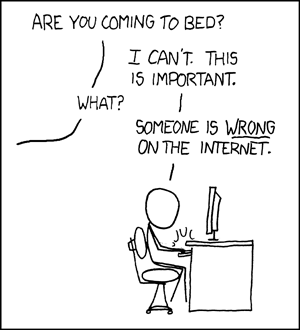
- “It can’t be done!”: seven years have gone by and I’m still fighting with Grumpy Cat.
2014
- “Sex, pianos and WiFi”: talking about Hedy Lamarr’s contribution to technology has become a commonplace, but in 2014 few people knew her story. In fact, even today the story gets told incompletely, leaving out George Antheil’s contribution and the strange relationship between these two artists who, united in frivolity, ended up developing such a momentous technology. This must be one of the few texts on the subject that tells the whole story.

- “A set of recurring conversations”: my favorite definition of a team. And when those conversations stop happening, or turn dissonant, the team ceases to exist.
2015
“How much longer will this damn project last?”: could we apply the principles laid out in this post to the length of the pandemic? The answer is no, but could you explain why?
“Revelations”: one night the “Angel of Categories” came to me in a dream and gave me a great revelation.
2016
“Those strange new languages”: the start of a series that I naively thought would take a few months :smile:.
“A profession for men only”: this post was born of the outrage I felt at the story of a young woman I interviewed, who told me how her dad forbade her to study computer engineering.

2017
“The 300 million dollar button”: the importance of usability is measured in millions of dollars gained or lost.
“The basic laws of human stupidity”: or why stupid people are more dangerous than evil ones, as we have unfortunately been able to see these last few years.
2018
“The Chain”: the start of a series about blockchain, but from a rather peculiar angle that may surprise you.
“Who is responsible for quality?”: the old and pointless argument over whether it’s QA or Development gets settled when we go back to the origin of things.

2019
“The End of Agile: Part 1: Grunge”: the start of the most personal series I’ve written, most of my professional life summed up in a few posts, whose last chapters are still being written. With a good dose of rock.
“The End of Agile - Part 8: Heavy Metal”: on the hard problem of estimating software.
2020
“Selective enthusiasm”: on the lessons the managers at Bell Labs taught us during the origin of Unix
“Let’s get to work”: on what home renovation reality shows teach us software engineers.
Wrapping up
I hope you like the selection; I had fun reminiscing as I went back over these posts.
I want to take the chance to thank all my sponsors on Patreon, those who have come and gone and those who are still there, for their support and trust.
And if you like what I write, you can visit my Ko-fi account and buy me a coffee: https://ko-fi.com/lnds. Your contribution helps keep this and other sites running, and helps prepare future projects.
Comments
comments powered by Disqus