$ cat posts/structure.md
Structure
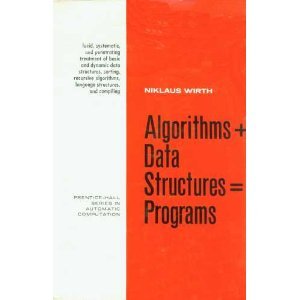
I remember that back when I was a student I came across a book by Niklaus Wirth titled Algorithms + Data Structures = Programs.
How simple the world of computing looks from the perspective of that title, but we have evolved a lot in the years since. We are at a stage in the development of computing that is centered on service. The wheel has turned and we are back at the point where it all began, only this time the wheel sits at a higher level. Computing started out as a service, controlled by a few for a few. Now computing is a service for the many, self-managed. Anyone can build a service, or at least the potential is there for anyone using the cloud to develop their own innovations.
The question is: how do we structure a modern application in the reality of cloud computing and software as a service? How do we account for things like security, fault tolerance, scaling, consistency, operational continuity, and a long etcetera?
We see many entrepreneurs who have picked up programming skills and built an innovative application, only to run into situations they had not considered. Servers collapsing, hard-to-maintain code that forces the new development teams coming on board to rewrite it, losing valuable time, and with it competitiveness.
In response, magic formulas show up, mostly tied to changes in methodology, with very little thought given to applying the experience built up over thousands of hours of engineering spent solving these problems in the past. No matter how innovative your application is, there is basic engineering work that cannot be avoided.
Just as Vitruvius told us centuries ago, architectural order, arrangement, is essential to developing a robust and useful architecture.
Chris Hoff proposes a conceptualization for the structure of cloud applications, which sums up in a layered model the elements and components needed to operate a service in the new reality that cloud computing brings.
Hoff’s model is this:
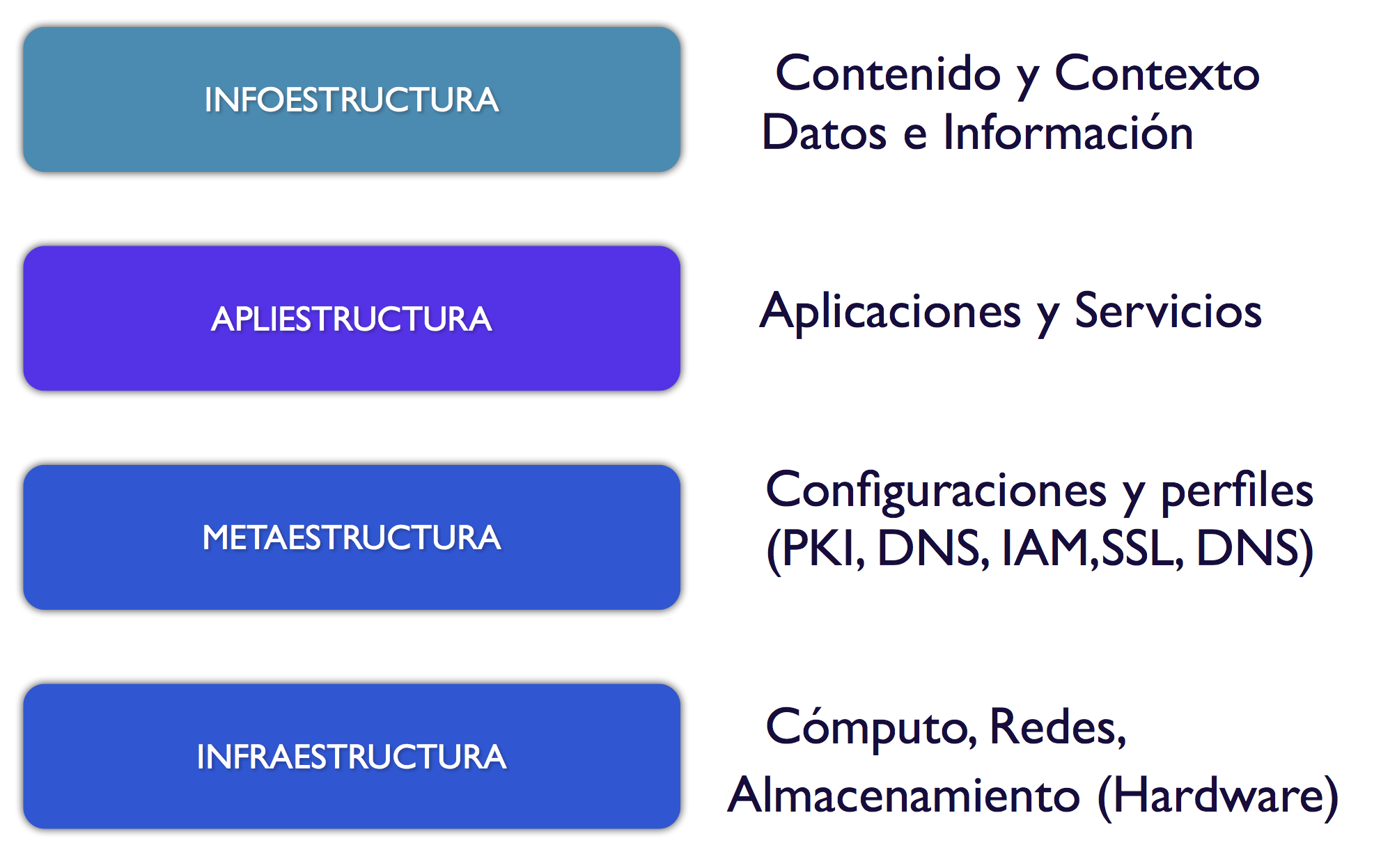
This model makes clear the four layers into which we have to divide our work when we work in the cloud.
At the bottom we have the infrastructure, which covers the most basic things needed to operate, the hardware and the base software: CPU, memory, storage, operating systems, compute and storage capacity.
Another foundational level is the metastructure, the layer that defines the configuration, access and profiling aspects of the infrastructure. In this layer we find networking elements such as DNS, routing definitions, access controls, network segregation, security, the PKI layer, SSL, etc. It is not infrastructure, but it defines how the infrastructure operates. In a way it is what defines the constraints on the infrastructure.
In the middle is the applistructure, the layer where applications and services live, where the code runs.
And at the top we have the context, the data, the information, which is what matters to the user.
It is important to understand that the infrastructure sometimes escapes our application or service. Think about it: if you expose a service as a REST resource, others will probably use that REST resource to build a mashup, that is, a new application of our data in another context. That is why, although at first glance data and applications seem inseparable, in the reality of cloud computing it is better to see them as separate things.
This model is the structure. It is what defines the form of every cloud application, and it is interesting because it lets us focus our work, and even divide and organize our team, with each collaborator developing their skills according to the layer they operate in. Something we will look at in the next post.
Comments
comments powered by Disqus