$ cat posts/utility-beauty-and-firmness.md
Utility, beauty and firmness
Architect comes from the Greek arkhitekton: arkhi is chief and tekton is builder. The architect was the chief of the builders.
Besides Phidias, the famous Greek architect, what we have kept from antiquity is the work of Vitruvius, a Roman architect, engineer and writer, who wrote a treatise called “The Ten Books on Architecture”, which for centuries was the only material architects had to build on. This book was fundamental in the Renaissance and had a great influence on Leon Battista Alberti, Leonardo da Vinci and Michelangelo. It is in this treatise that Vitruvius establishes the three essential characteristics of every structure: “utilitas, venustas and firmitas” (utility, beauty and firmness).
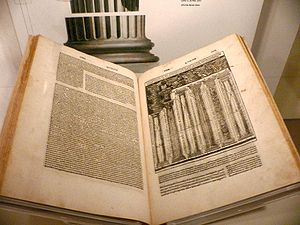
Utilitas refers to utility: it must answer the question of what we are building a given structure or tool for. Venustas is beauty: we appreciate the beauty of a building because by our nature we want to use things that are beautiful, pleasing to our senses and appreciated by our mind. Firmness has to do with the soundness of what we build: we want things to last and to withstand the use we will give them. For Vitruvius there had to be a balance among these three elements; none should outweigh the other two.
Unfortunately Vitruvius’s treatise is the only thing we have recovered in the way of theory from Roman architecture. We can’t be sure it was the best treatise on the subject in its time, and it probably wasn’t. Some critics have noted that he wavers on how to organize the art of architecture. But his contribution is interesting, because it starts from practice, from experience. According to Vitruvius:
“Architecture is a science arising out of many other sciences, and adorned with much and varied learning; by the help of which a judgment is formed of those works which are the result of other arts. Practice and theory are its parents. Practice is the frequent and continued contemplation of the mode of executing any given work, or of the mere operation of the hands, for the conversion of the material in the best and most finished manner. Theory is the result of that reasoning which demonstrates and explains that the material wrought has been so converted as to answer the end proposed. For the merely practical architect is not able to assign sufficient reasons for the forms he adopts; and the theoretic architect also fails, grasping the shadow instead of the substance. He who is theoretic as well as practical, is therefore doubly armed; able not only to prove the propriety of his design, but equally so to carry it into execution.”
Vitruvius’s merit lies in this definition of balance among three fundamental aspects of all architecture: Utility, Beauty and Firmness.
If we apply it to our designs, when we plan an application or a system, we should take Vitruvius’s advice into account.
That dialectic between the beautiful and the useful is always present when we discuss architecture, to the point that it defines great periods of its history. The same thing happens in software architecture. Only now are we discussing the value of beauty, understanding it both from the point of view of interfaces and from that of the way we organize our code.
For me, beauty arises from the combination of the four elements into which Vitruvius breaks it down: architectural order (“the relation of each part to its use”), arrangement (“the layout in plan, in elevation and in perspective”), proportion (“the agreement of the whole work and its parts”) and distribution (“the proper and best possible use of materials and of the site, and seeking the lowest cost for the work, achieved in a rational and measured way”).
We appreciate an architecture that respects these four elements, but it is obvious that in software architecture this applies in a different way, although the fundamental aspects are preserved.
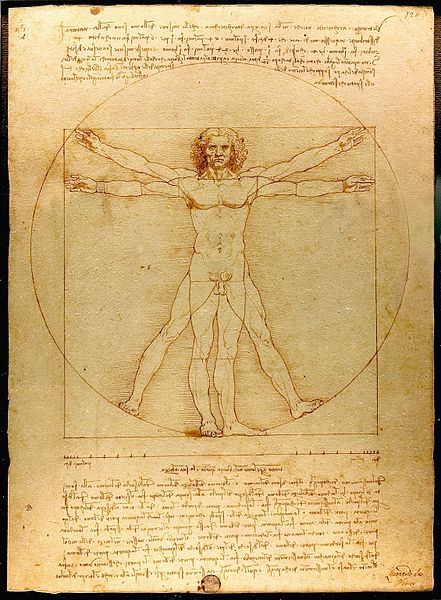
For Vitruvius, his ideas of architectural harmony are in accord with what we observe in nature, and they are present in the greatest of all its works: the human body. Vitruvius describes the proportions of the human body, which were captured years later by Leonardo da Vinci, who made a famous drawing applying the proportions described by this author. It is the famous “Vitruvian Man”, which reminds us that in the end architecture must fit the needs of human beings, as Leon Battista Alberti used to say.
Comments
comments powered by Disqus