$ cat posts/fending-for-yourself.md
Fending for yourself
The truth is I don’t remember how I came to know Enzo Abbagliati. Even though we have friends in common we had never crossed paths in person; the truth is I knew him as a blogger before I knew him in person. I have to admit I’ve learned many things from Enzo, important things, like the fact that Springfield has two libraries, which matters to all of us who care about looking after our heritage and defending the public library. As part of this blog’s anniversary, @cadaunante honors me with this extraordinary article that invites us to reflect:
Fending for yourself
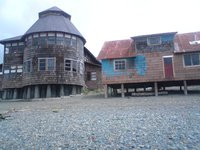
Quemchi Library in Chiloé (photo taken from its Facebook page https://www.facebook.com/biblioteca.quemchi
On the night of Thursday, August 30, the public library of Quemchi (Chiloé) was robbed. According to the information published in the press, the thieves’ loot was the computer equipment of the BiblioRedes program. Just one more robbery like so many others, someone might think who doesn’t know the role that equipment plays in a public library. One more robbery, someone will conclude who doesn’t actually know what a public library is for.
The new human development report on Chile prepared by the UNDP concludes that we Chileans are satisfied with our personal lives but express high levels of dissatisfaction with the society we live in. It would seem contradictory. Is it possible to say that we are happy with our personal well-being when we are critical of the society we live in? Let’s rephrase the question: can we, as individuals, show high levels of happiness when we don’t like our surroundings?
Wenceslao Unanue is already breaking down the UNDP data, putting the emphasis on the inversely proportional relationship between happiness and socioeconomic level. Nothing new, you will say. But the question Unanue reflects on is about our perception of loneliness. While in the ABC1 group, the wealthiest, 14% of people stated “I frequently feel alone”, in group E, the poorest, the figure reached 42%. There are no social networks, the surroundings don’t act as a support, nor does the person feel that from there they can project themselves and build a life. And yet, on a scale of 1 to 10, that same group gives an average of 6.7 to its “life satisfaction”. In other words, I can be happy despite perceiving and criticizing the breakdown of my social fabric.
A first reading of the UNDP report seems to point to the triumph of the logic of “fend for yourself”, against the grain of the unrest that since late 2010 has been showing up in the countless demonstrations that have taken over our public life. Seen that way, the robbery of the Quemchi library makes sense.
According to studies carried out by BiblioRedes a few years ago, approximately 2/3 of the people served by the program (and by extension by public libraries) live around the poverty line or below it. They are people, citizens of our country, for whom the library is in many cases the only option for access to information, culture and recreation. Robbing a public library is robbing the community, but above all robbing those who have the least in that community. And yet robberies at libraries, while not massive, have been a constant ever since BiblioRedes equipped them with high-end computers in late 2002.
I don’t know who is behind the Quemchi robbery or what their motives were, but clearly in their case satisfying their needs by “fending for themselves” meant attacking the common good, the collective heritage of the land where Francisco Coloane was born. It is, if you’ll allow me the hyperbole, a sublime representation of a model of society, of country, that has been deliberately implanted in our country since the mid-1970s, one where personal entrepreneurship is the basis of wealth, where the freedom of the individual stands above the well-being of the collective. A deconstruction of the commons, carefully designed and put into practice under the only authentic revolution to take place in our country, the capitalist one, analyzed in detail by my good friend the historian Manuel Gárate Chateau.
The UNDP report does not yield contradictory results, but ones deeply consistent with the Chile that has been under construction since 1973. We are happy in our personal sphere, but we dislike our collective dimension. We distrust institutions, just as we distrust our neighbors, or feel alienated from our graffiti-covered neighborhoods or from public transport in the capital, where we massively choose not to pay. Because we are not interested in what is common, what we share. Meeting others gets in our way, makes us uncomfortable, because it forces us –like every exercise in collective construction- to give up part of our personal autonomy, to trade away part of our individual project, the one the UNDP concludes we are satisfied with. The effort makes no sense, because it possibly won’t increase our happiness, in the same way that it would make no sense for the community of Quemchi to voice its repudiation of what happened to its library. I confess, though, that I harbor the unfounded hope that this last thing may happen.
I close this entry by thanking Eduardo for the invitation to publish on his blog on the occasion of a new anniversary. I read La Naturaleza del Software and I admire it the way one admires endangered species: knowing that with them goes a piece of our identity. In that portion of the Chilean blogosphere (such a “last decade” label) that I have in my feeds, this blog, with its recurring new posts, looks like a dinosaur that doesn’t yet know the asteroid has already hit the Earth. I don’t think I’m wrong: this is Eduardo’s stubborn way of contributing to the rebuilding of the collective.
Comments
comments powered by Disqus