$ cat posts/harry-potter-and-the-mystery-of-the-lost-hour.md
Harry Potter and the mystery of the lost hour
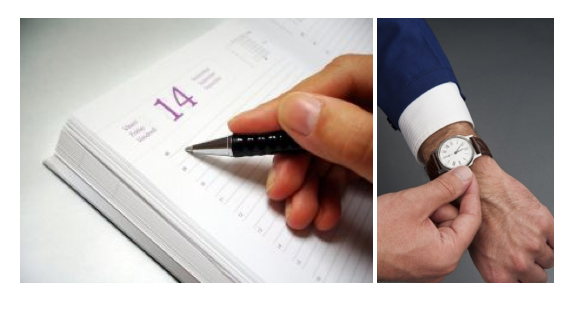
In the old days you wrote down the time of a meeting in a paper planner: “9:30, March 12, coordination meeting...”, the clocks changed, you adjusted your watch, and that was that. The ink didn’t erase and rewrite itself by magic, leaving 10:30 on the page, at least not in our muggle world.
But there is more and more technological magic in our world; Ms. J.K. Rowling got us used to paintings that move and interactive news. Now our calendars move by magic: if the time changes, our digital calendars adjust themselves and nobody misses an appointment or shows up late. The magic works.
Until the Ministry of Magic steps in. You know how it goes: just like in Harry Potter’s magical world, the ministry steps in to make life harder for its people. Especially when it decrees, on very short notice, that the clock changes must be moved, and the wizards, sorcerers and elves who keep our servers in order have to work overtime adjusting time zones, Exchange servers, application servers, and all the mystical paraphernalia that holds up our esoteric timekeeping reality, so that nobody gets to work late and things run when they should.
Last year the Ministry ordered the time change, but issued the official decree one day after the measure took effect! That caused problems, because despite all the lobbying of sorcerers and wizards around the world, they split into two groups: the proactive ones, like those at Microsoft and in the open source world, who rushed to create corrective enchantments before the date of the change, official decree or not. And on the other side, the proud Pure-Blood Wizards of Google, who would not brew a single potion until the Department of International Magical Cooperation issued “The Decree”.
This year the Pure-Bloods made a gesture of condescension, waved their magic wands and moved us to Argentina. They even made a nice video:
Thank you, Pure-Blood Wizards of Google!
Once again the procedure for switching to winter time in our country has been modified. Officially this measure is considered positive by The Ministry. Its grounds are:
a. Information provided by the National Traffic Safety Commission, which evaluated the effects of the time change and found signs of a decrease in traffic accidents.
b. Evaluations of energy consumption indicate that the savings produced by shifting the schedule would allow for lower consumption, of between 0.4 and 0.7% of average daily consumption in the residential sector.
c. On security and crime, the Strategic Center for Crime Analysis carried out an inconclusive analysis of the changes in criminal behavior following the time modification, which offers signs that would make it possible to state that, even if only marginally, the measure contributed to reducing the occurrence of crimes during the hours with more daylight resulting from the time change.
d. Public opinion studies show that more than 60% of the population is in favor of eliminating or shortening winter time.
And where is the impact on IT taken into account?
Ground a) is perfectly reasonable, more light, fewer accidents, but couldn’t the accident rate have dropped because of other factors too? As for energy consumption, the impact was not as big as they said.
Alejandro Barros wrote last year:
“In the case of some European Union studies, the potential energy savings range between 0% and 0.5% of consumption, which depends a great deal on the country’s energy mix, as well as its level of development, since the higher the level of development, the higher the per capita consumption.
The National Energy Commission has said that in Chile the savings would be on the order of 3% of consumption. Let’s remember that this mainly affects household consumption and not industrial consumption. I would like to know how they arrived at this number, since I don’t see why in Chile it would be 6 times greater than the maximum savings projected in Europe. In today’s press coverage Chilectra estimates the savings at 0.3% to 0.5%, which will depend on the length of the period.”
Congratulations, Alejandro! You have proven yourself a great wizard, an expert in the divinatory arts: you predicted the Ministry’s results. The people at the National Energy Commission took classes with Professor Trelawney.
On public safety, and the rise or fall in crime, well, let’s not talk about that; we all know what is going on with that item...
And point d) on citizen support: at last the government can show more than 60% support for something! (Just don’t ask me or the IT people.) I’d like them to run the survey again this year and see whether that 60% holds.
I think it’s fine that The Ministry runs evaluations and shows its results, though it’s easy when you only consider the positive or neutral variables and ignore the negative impacts. The impact on magic, I mean on information technology, is not among the Ministry’s concerns; it is simply ignored.
But fine, if the measure is so positive, then why don’t we make it permanent? That way we can ask the wizards of the whole world to adjust their services, operating systems and software to Chile’s new rules. Let’s stop changing this every year! How long are we going to keep wasting everyone’s time? (if you’ll pardon the pun ;).
In any case I still believe that what I proposed last year is better: a single time, year-round, aligned with our real solar time, UTC-5. That would be healthier for our bodies and our psyche, but maybe I’m being too esoteric...

Comments
comments powered by Disqus