$ cat posts/compilers.md
Compilers
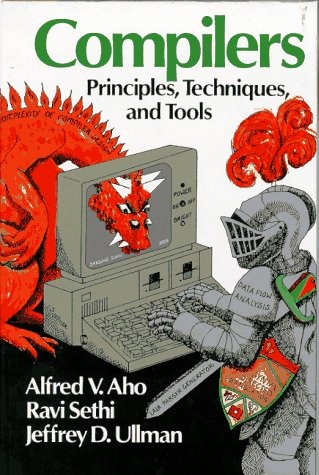
Compilers is now an elective course for computer engineering at the school where I studied1. Back when I was a student I believe it was required, and I think it should be a required course.
I don’t know why the University of Chile decided to make this course optional, nor do I know how many people take it each semester. I’ve also heard that enrollment in computer science has dropped; I hope some academic can confirm that for me.
Either way, I think making the compilers course optional is a mistake, because it is one of the courses that best pulls together everything you learn in the degree.
When you build a compiler you apply:
Data structures (ASTs, graph coloring)
Algorithms, automata theory, formal language theory
Fundamentals of programming languages (in the design of the language)
Optimization
Programming in machine code (real or virtual)
Modularity, integration, loose coupling (the structure of the lexical, syntactic and semantic analyzers and code generation helps you understand and apply, for the first time, the concepts of software architecture
Software engineering, design, analysis
Building a compiler is the challenge that shapes you into a real software developer. Anyone who wants to work as a software engineer should try to build a compiler at least once in their life.
In my professional life I have built 2 compilers and designed 3 languages (one of the languages used the C preprocessor, so it was really a set of macros).
These languages are what we now call DSLs, domain-specific languages, designed to solve one specific problem. The first was developed together with Marco Zúñiga. It had a compiler and its own virtual machine, and we ran training courses and licensed it; we made some good dollars with SanScript, as we called it. A DSL for automating data communication tasks.
The second compiler was really a translator, which translated from a sort of Haml-like markup and generated JSP pages. The fun part was that the pages were also resolved by a filter implemented as a servlet, which interpreted the files with the .edc extension (my initials) and generated the JSP pages into a cache. The technical counterparts I dealt with back then were always asking me what these pages with the ‘.edc’ extension were :smile:
But I have never built a compiler for a general-purpose language, even though I’ve had the idea of doing it for many years. Now that everybody feels like killing Java, it occurred to me that it’s time to show my proposal, so that the first version of my language runs on the Java Virtual Machine.
Ogu
The language is called Ogu. Its name is a tribute to the character created by the Chilean cartoonist Themo Lobos, a very likable caveman who is the adventure companion of Mampato2.
This is a simple program in Ogu:
println "Akarrú!!!"
Nothing new, you’ll say, even Python does that, but try writing this program in Java :wink:
In this article I’m going to give a brief introduction. I hope to write more over the next few days, describing the features of this new language as I go. I’m still in the design process, although there are ideas I’ve had for years. There are certainly influences from other languages, as you’ll notice. The important thing is to keep in mind that things are very likely to change.
The first thing to note is that it is a statically typed language, like Java, like Scala or like Haskell; that is, every variable must have a type, so every declaration of a symbol in Ogu must carry its type.
Here is an example of declarations in Ogu:
blog : String

ogú : Cavernícola

x, y : Int
The colon ‘:’ separates the variable from its type.
Assignment in Ogu uses the ‘=’ sign, and serves to initialize a variable that has been previously declared, for example:
blog = "La naturaleza del software"

ogú = Cavernícola(nombre:"Ogú", grito: "akarrú!!!)

x = 1

y = 2
Of course, variables can be given an initial value when they’re declared:
blog : String = "La naturaleza del software"

ogú : Cavernícola = Cavernícola(nombre : "ogú" )

x, y : Int = 1, 2
But Ogu has a certain flexibility, to reassure the lovers of dynamic languages, in that it infers types:
blog := "La naturaleza del software" // blog is of type String

ogú := Cavernícola(nombre: "ogú") // ogú is of type Cavernícola

x, y := 1, 2 // x and y are of type Int
You’ll have noticed that the variable names have accents; that’s because Ogu accepts (will accept) code written in Unicode.
Another important thing: in Ogu, if something starts with an uppercase letter it is a class declaration; if it starts with a lowercase letter it is a variable.
But all variables are immutable; that is, you can’t change their value once assigned:
x := 1

x = 2 // error!!!
If you need variables to be mutable you must declare them with the reserved word ‘var’ in front:
var x := 1

x = 2 // ok, because x is mutable
This matters because Ogu favors functional programming, as we’ll see further on.
Ogu is like the Scala language: it supports 2 programming paradigms, functional and object-oriented. In Ogu the difference between functions and classes is somewhat blurry (the use of uppercase for classes helps disambiguate it).
Functions:
Let’s see how to declare a function:
factorial : Int --\> Int

factorial 0 = 1

factorial n = n \* factorial (n-1)
This example shows that Ogu favors the functional paradigm, and follows a syntax very similar to Haskell’s.
The value of a function is determined by the expression to the left of the ‘=’ sign.
What we have are patterns, or cases, that define the function. We can write factorial in this abbreviated form:
factorial : (n:Int) --> Int = (n == 0) 1 else n \* factorial(n-1)
If there is more than one expression in a function, they must be enclosed in braces {}.
In the abbreviated form the named arguments must go in parentheses, and naming the result is optional.
The value of the function will be the value of the last expression, unless the result has been named:
suma : (a,b : Int) -> Int = { a+b // the value is a+b\
}

suma2 : (a, b : Int) -> (resultado: Int) =  {
    resultado = a+b
    println "el resultado es " + resultado // the value of suma2 is
    resultado
}
If the function takes no arguments you must use the expression () –> Type, in order to resolve ambiguities:
uno : () -> Int = 1 // always returns 1, but it is a function

uno := 1 //  is the variable uno
If the function returns no value you must use –> Void, or just write the parentheses:
saludar : () -> Void = println("hola" )

saludar : () = println("hola" )
Let’s see how to declare a class
Persona : (nombre: String, edadInicial: Int) ={

**var** \_edad = edadInicial

saludar : () = println "hola " + nombre

celebrarCumpleaños : () = {\
    _edad = \_edad + 1\
    println "¡¡ feliz cumpleaños " + nombre + "!!"\
    }
}
As you can see, Ogu is a language that favors syntactic economy. The arguments nombre and edadInicial are attributes of the class, and there’s no need to declare them in the body; _edad is also an attribute, but a private one. Identifiers that start with _ are private, as in Python.
Names that start with an uppercase letter are types or classes, and names that start with a lowercase letter are names of functions or variables. If a name starts with _ followed by an uppercase letter it is a private type.
Notice that along with declaring the Persona class, we have defined the class constructor.
Now we can present the declaration of Cavernícola:
Cavernícola : (nombre, grito : String)

Cavernícola  : (nombre : String)  = Cavernícola(nombre, "akarrú!!")

Cavernícola = {

    pelear : () = {\
        println "yiko pelea!"\
        println grito\
    }
}
Note how we have declared Cavernícola with two constructors.
There’s more to tell, but this is a preview of Ogu, which I hope you like. The project will be open source and will be published on github. For now there is only a parser, which still has some problems with certain ambiguities. I hope to have a first version soon so you can start trying it out.
This is the first article on Ogu; as I work through the design problems I’ll publish more. I look forward to your opinions, questions and suggestions.
The curriculum for Computer Science Engineering (Ingeniería Civil en Computación) taught by the DCC (for those who enrolled before 2007, and those who enrolled after 2007). ↩︎
The character’s name is actually Ogú (with an accent on the u), and his war cry is Akarrú, yes, Akarrú. ↩︎
Comments
comments powered by Disqus