$ cat posts/imagined-causes.md
Imagined causes
There is a kind of logical fallacy called post hoc, from the Latin “post hoc ergo propter hoc” (“after this, therefore because of this”), which is a problem of false causality. It stems from the principle of causality, that every effect must have a cause, and that the cause precedes the effect: “since the rooster crows before dawn every day, the rooster makes the sun come up”.
Now, sampling bias, like the one we went over in our previous article, suffers from this kind of fallacy. If we see the wind blow and then the branches and leaves of the trees move, it is safe to conclude that the wind caused that movement; that reasoning seems safe. The problem is that not every relation of precedence between events in time determines causality. In physical phenomena the real causes can eventually be found, because experiments can be repeated, but in social theories, or even in theological ramblings, falling into the post hoc fallacy is very common.
For example, Malcolm Gladwell’s theory, the law of the few, falls into the post hoc fallacy. Whenever an event happens such as a book that becomes a bestseller, a big movie that breaks the box office, an artist who suddenly becomes famous, or a product that turns into a hit, there is someone who starts buying or doing something related to that event before everyone else, and that person will look influential. Watts criticizes this view of the influential few who generate these social epidemics, since there is a series of other factors that trigger this accidental influence.
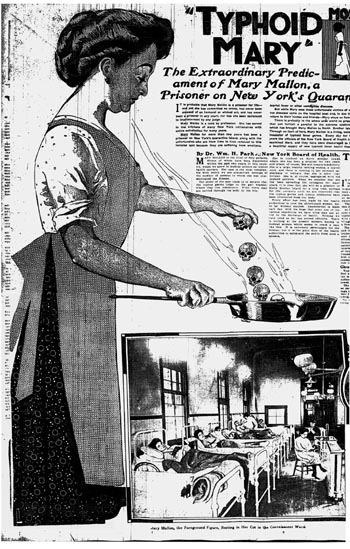
The problem is that the post hoc fallacy can produce these accidental influencers. Consider, for example, the epidemic of SRAS, Severe Acute Respiratory Syndrome, or SARS as it is known in English. In late 2002 this disease emerged in Hong Kong. Later studies by epidemiologists determined that a single person, a young man who had traveled from mainland China to Hong Kong by train, and who had been admitted to Hong Kong’s Prince of Wales Hospital, had infected 50 people, which led to 156 cases in the hospital alone. Subsequently, the outbreak at the Prince of Wales Hospital led to a second outbreak in Hong Kong, which ended with the epidemic spreading to Canada and other countries. Based on these examples, epidemiologists have become convinced that the severity of epidemics depends disproportionately on the behavior of a few special individuals, the superspreaders (like the famous Typhoid Mary).
But a more careful analysis of the SARS case reveals that the real cause of the problem was a misdiagnosis of pneumonia when the patient was admitted to the hospital. Instead of being kept in isolation (the standard procedure when receiving a patient with an unknown respiratory virus), the patient was placed in an open ward with poor air circulation. What’s more, since he had been misdiagnosed with pneumonia, he was put on a bronchial ventilator, which started spreading a large quantity of viral particles into the air around him. The conditions in the ward, packed with people, meant that a large number of patients and hospital staff got sick too. These events were very important in the spread of the disease, at least locally.
Seen this way, the patient doesn’t seem as important as the details of his treatment. Before this, nothing we could have known about the patient would have made us suspect that there was anything special about that person, because there is nothing special about that patient.
In the events that came after the outbreak at the Prince of Wales Hospital, there is nothing special about the people who spread the virus either. In fact, in the second Hong Kong outbreak, in an apartment building, there is a sequence of other additional elements, such as a leak in the building’s plumbing, that explains the spread of the virus (in this case a resident of the building had been treated at the hospital, got infected with SARS there, and was suffering from diarrhea when he returned to his apartment).
As you can see, common sense fools us once again, by generating plausible causes in which special people, or people with special attributes, appear as the ones responsible for extraordinary events. This, added to the fact that many other details and pieces of evidence tend to get discarded, ends up leaving a single thread that explains everything.
Comments
comments powered by Disqus