$ cat posts/the-problem-with-reason.md
The problem with reason

Chile’s national coat of arms carries the phrase “Por la Razón o la Fuerza” (“By reason or by force”). This phrase, added during the government of José Joaquín Prieto, established the primacy of Reason in collective life. If reason is violated, if the law is violated, it can be restored through the use of force.
When we talk about Reason, we are talking about a concept that originated during the Age of Enlightenment (17th and 18th centuries). Essentially the concept of Reason as laid out by the great philosophers and politicians of that time, a concept that was the basis for founding the republics and democracies of the late 18th and early 19th centuries. Reason, George Lakoff tells us1, was assumed to be:
Conscious: we know what we think.
Universal: it is the same for everyone.
Disembodied: it is independent of the body, of perception and of action.
Free of emotions, and of passions.
Value-neutral: the same reason applies regardless of your values.
Interest-based: it serves one’s own interests.
Literal: able to fit an objective world precisely, with the logic of the mind able to fit the logic of the world.
The unfortunate thing, and we have seen some of this in the last few posts, is that all of those attributes of reason are false.
The results of the cognitive sciences over the last three decades have shown that many of these things don’t hold.
In recent years the cognitive sciences have discovered that:
More than 90% of reasoning happens at the unconscious level.
We don’t all reason the same way; there are differences that come from our physical makeup.
In fact, we think with our neurons. This seems obvious, but in the 18th century Cartesian dualism was a very important paradigm. It is wrong, though: we think with our body.
Which brings us to the fact that reason isn’t separate from passion and emotion either. We reason with our feelings; it is a delusion to pretend that when we reason we should leave our feelings out of our argument. Antonio Damasio, in his book “Descartes' Error”2, shows how people who have suffered brain damage in the areas that deal with emotion are unable to reason properly.
And since emotions are involved in the way we think, values matter to us when we reason.
We have seen several examples of how our choices often don’t line up with our personal interests, and we choose things that go against our “rational” interests.
The world is complex, we have seen that common sense is prone to self-deception, to circular reasoning, there are hidden motivations and it is very hard to describe how people act.

Antonio Damasio
In the words of Antonio Damasio:
“Thus, in anatomical and functional terms, there may well be a thread connecting reason with feelings and body. It is as if we were possessed by a [passion for reasoning]{.underline}, as if we were driven to reason by an impulse that originates deep in the brain and, permeating other levels of the nervous system, emerges in the form of feelings or nonconscious biases to guide decision making.”
Descartes’ “I think, therefore I am” is invalidated. “We are, and then we think, and we think only insofar as we are, because the structures and operations of being cause thinking.”
So the concept of Reason, of what is rational, has to change. All the behaviors we analyzed in previous articles that look irrational to us look that way because our definition of Reason is wrong; it does not match the scientific reality, the evidence from the cognitive sciences. It’s not that we are irrational, as some commenter suggested, but that our idea of what is rational rests on an outdated principle that has nothing to do with us. Just as at some point we moved past Aristotelian physics, and since Galileo we no longer accept the old paradigms that explained the physical world, we must take the same step in the world of sociology and psychology, guided by the modern researchers of the cognitive sciences.
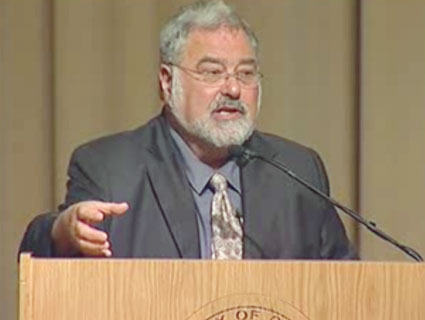
George Lakoff
This matters, because it has implications even in politics. George Lakoff warns us that radical conservatives have been waging a culture war, and the main battlefield is the brain. Their goal is to change everything to fit the conservative worldview. Progressive values, centered on equality, human rights, social responsibility and the inclusion of everyone, are under threat. And progressives have, without knowing why, handed conservatives an enormous advantage in this culture war. The values of the patriarchal family have been projected onto society, the supremacy of religion and the market over freedom and solidarity.
Progressives have accepted the old view of reason, the view born in the Age of Enlightenment. According to George Lakoff, progressives have ceded control of the political mind to conservatives. The theory of reason according to the principles of the Enlightenment, even though it has been shown to be false, persists, and this has negative effects, because it:
Gives a misleading view of political ideologies and of how voters think.
Hides from the public and the press much of what contemporary conservatism is and what it is trying to do.
Hides the most important issues.
Keeps progressives from consciously articulating their moral vision and a moral vision of government.
Forms the basis of neoliberal thought, which leads, far too often, to progressives surrendering their ideals without even getting around to stating them.
And renders progressives and neoliberals ineffective.
Lakoff sums all this up in one sentence:
“You can’t understand twenty-first-century politics with an eighteenth-century brain.”
So it is time to rethink our whole notion of reason, and from there our political action, because we have seen that it rests on concepts that are outdated and wrong. Our concept of reason has to change.
Notes:
The Political Mind, George Lakoff. ↩︎
El Error de Descartes (Descartes’ Error), Antonio Damasio, Editorial Andrés Bello, 1997, page 273. ↩︎
Comments
comments powered by Disqus