$ cat posts/experimenting.md
Experimenting
When we looked at the strategy paradox we found that big plans can produce a big disaster, or a big success. Mediocre plans produce mediocre results. They say that “a bad plan is always better than no plan”, so in the face of uncertainty a measure and react kind of strategy looks like a reasonable alternative, and probably a more successful one.
Now, in many situations measurements don’t tell us what we want to know. For example, when we are planning an advertising campaign. The CFO of a major international company once lamented that they had spent 400 million dollars on a brand positioning campaign, not for any particular product, just for the brand. The question was how effective that spending had been. He couldn’t tell whether the payoff had been 400 million or zero. The CFO was not saying the advertising spend had been ineffective, only that he had no idea how effective it had been. It was entirely possible that if they hadn’t spent a cent their performance as a company would have been the same, but it was also possible that without spending those millions they would have faced a disaster.
Now, 400 million dollars sounds monstrous, but consider that American corporations spend 500 billion dollars a year on marketing. So the obvious question is how much of that money actually has an effect on consumers. Does anybody have any idea?
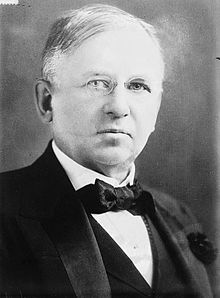
In the late 19th century the American magnate John Wanamaker, considered by some to be the pioneer of modern marketing, complained that:
“Half the money I spend on advertising is wasted; the trouble is I don’t know which half”
Wanamaker was considered an advertising genius, and a pioneer of the department store, introducing concepts such as the money-back guarantee. He was regarded as an honest businessman; he offered his employees free medical care, education, recreation facilities, and pension and profit-sharing plans. Although he fiercely opposed unionization.
Much of what retail does today to grab consumers' attention Wanamaker had already tried in the 1860s.
So, despite all the progress we have made in science and technology, Wanamaker’s question still stands. The CFO mentioned earlier is left with the same doubt as the late-19th-century magnate.
It’s not that we lack better measurements. On the contrary, since Wanamaker’s time we have plenty of companies whose business is measuring; stores have their customer databases, CRM systems, business intelligence. There are rating agencies like Nielsen or ComScore that measure the stream of clicks on digital ads. We have a lot of information, but the problem is that advertisers want to know whether the ads cause an increase in sales, and almost always what you get is a correlation between ads and increased sales.
“Correlation does not imply causation”. That should be clear, but we get confused. Take people who go on a diet. When people diet and lose weight they immediately credit the diet. But it turns out that besides dieting, people who start a weight-loss program also start exercising, or change their habits, like the times they eat, or their sleep routine, and they even pay more attention to what they eat. So any of those changes, or a combination of them, is probably responsible for the weight loss, more so than the choice of diet.
The same thing happens in advertising. Advertisers plan their ad spending based on future sales, or start spending more in peak seasons, like the run-up to the holidays. So in those scenarios sales and advertising will be correlated, even if the advertising produces nothing special (at Christmas people will go shopping anyway, regardless of the ad campaign), or there may be other external factors causing the higher sales that are not necessarily related to the advertising.
So telling correlation from cause is hard, in general. One possible solution is to run an experiment. If we want to measure the effectiveness of a “treatment” (a diet, or an ad campaign), we must apply it in some cases and not in others (the control group). Just as is done when evaluating new drugs. Some patients are given the drug, and others get a placebo. Only if the people on the treatment improve more often is the new drug approved.

In the world of online advertising it has been found that the sponsored ads that show up in search results are more successful than the ones placed on websites. The reason is that sponsored ads depend heavily on what you were searching for. People searching about problems with their car will click on ads for repair shops in their area.
It is the foundation of Google’s wealth, and the reason that advertising can be more effective than what you see hanging on Facebook, in Gmail, or in the sidebar of this very blog. When I am searching I am more receptive to advertising than when I am simply browsing the internet.
This is poorly understood, because advertisers pay a premium to reach the consumers most likely to buy their products. This is what is called targeted advertising, where the idea is to segment the consumer. What they fail to realize is that those consumers will buy their products anyway. The value of that advertising lies only in the marginal consumer, the one who would not have bought the product had he not seen the ad. The only way to determine the effect of advertising on marginal consumers is by running experiments in which the decision of who sees the ad and who doesn’t is made by chance.
That is hard to do in traditional advertising, like billboards on the highway, or ads in a magazine. But it is possible in the electronic world. There is an experiment discussed by Duncan J. Watts1, carried out by his colleagues at Yahoo, David Reily, Taylor Schreiner and Randall Lewis: Advertising Works.
It was a field experiment with 1.6 million customers of a retail chain who were also active Yahoo! users. To run the experiment, Reiley and his team assigned 1.3 million users to the “treatment” group, who would be shown the retailer’s ads whenever they landed on a site operated by Yahoo!. The other 300,000 were assigned to the control group, meaning they would never see the advertising, even if they visited exactly the same pages as the other group. Since the assignment was random, any differences had to come from the performance of the ad itself, and since the users were also in the company’s databases, the effect of the ad could be measured in terms of actual purchases.
Using this method the researchers estimated that the additional revenue generated by the ads was roughly four times the cost of the campaign in the short run, and probably higher in the long run. They therefore concluded that the campaign had indeed been effective, good news for the retailer and for Yahoo!. But they also discovered that almost all of the effect was on older customers. The ads had almost no effect at all on people under 40. This looks bad but it is an advantage, because the experiment tells us that something here isn’t working with young people, and we can run new experiments to capture their attention. And even then, if we get no results with the young consumer, we can find out whether it is the brand that doesn’t appeal to that audience, or whether online advertising is ignored by that group. Whatever the outcome, at least the advertiser knows it isn’t worth spending money on this segment and can concentrate resources on the segment that does respond to the ads.
So experiments should be seen as a way of learning as you go; they are part of an ongoing process. You shouldn’t expect the definitive answer from them. They will probably raise new questions, but they let you draw certain distinctions that help make more efficient use of resources.
These experiments are being used more and more, not only in online marketing but also in user interface design, or in designing website navigation. In the social sciences, to measure the effectiveness of certain public policies, and in companies to measure pay-for-performance schemes. The potential of experiments is enormous, and they clearly should be used more.
Duncan J. Watss. Everything Is Obvious: *Once You Know the Answer
↩︎
Comments
comments powered by Disqus