$ cat posts/a-world-run-by-algorithms.md
A world run by algorithms
On May 6, 2010 at 2:45 PM New York time there was a stock market crash that sent the Dow Jones index down 900 points (a 9% drop), and it recovered completely a few minutes later. This phenomenon was named the 2010 Flash Crash
There are over 2,000 particle physicists currently working on Wall Street. What they do is model the behavior of the markets in algorithms that trade stocks in a matter of microseconds. To give you an idea, it takes us 500,000 microseconds to click a mouse. So in algorithm terms, if you take a couple of seconds you are a loser.
Consider this image, taken from a recent talk by Kevin Slavin at TED:
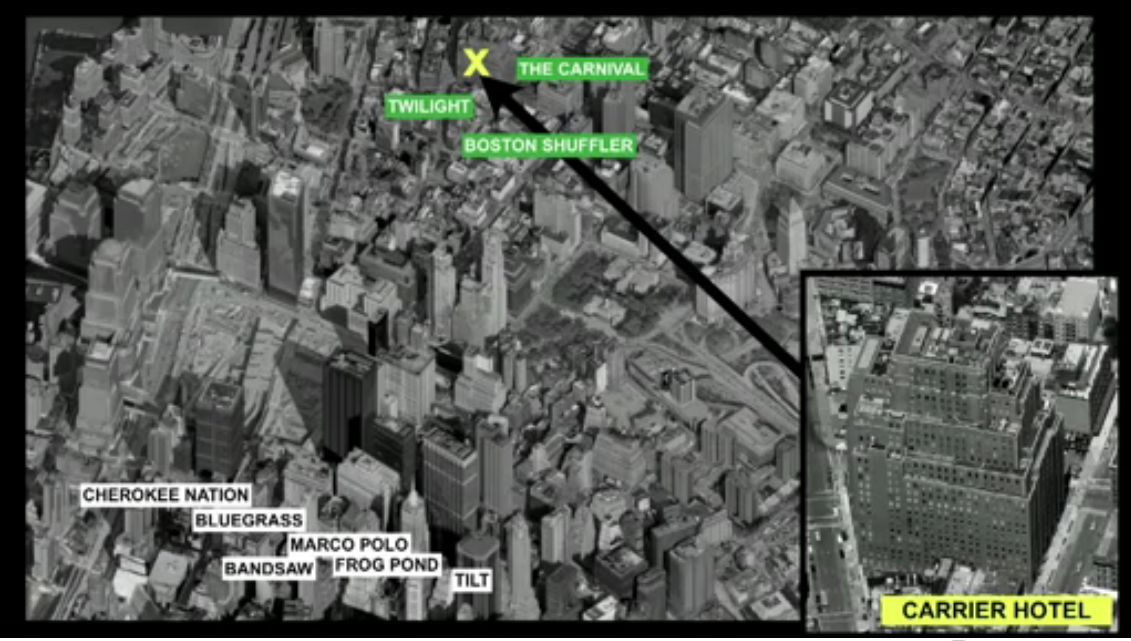
A Carrier Hotel is a datacenter where you rent space to put your servers. In the picture we have the carrier hotel located on Hudson Street, where the New York Stock Exchange’s shares are traded. The names shown in white or green are sites with servers running stock buying and selling algorithms. What happens is that algorithms such as Cherokee Nation, Bluegrass, Marco Polo and so on are at an 8-microsecond disadvantage compared to the sites running the algorithms The Carnival, Twilight and Boston Shuffler. So the buildings around the carrier hotel are being hollowed out to make room for servers that sit closer to the place where the stocks are traded.
The company Spread Networks dug a 1,300-kilometer trench between Chicago and New York to be able to transmit a 14-millisecond signal over a dedicated fiber optic link. So we are literally reshaping the world to give an edge to some algorithms that trade for us on the stock exchanges. But has anyone thought about the consequences all of this could have?
Nobody really knows what happened in the 2010 Flash Crash, because nobody was in control of what happened. It was literally the machines that brought the market down for 9 minutes that day. Somehow the algorithms fell into a strange resonance and generated a spiral of trades that led to the instant drop in the market, and those same algorithms reacted and generated the recovery.
I get chills when I think that our pension funds, or the jobs of thousands of people, depend on the coordinated behavior of many algorithms, written under the assumptions of a bunch of theoretical physicists experimenting on their computers with their ideas about how to deal with complexity, as if this were a puzzle game where the point is to show who can write the smartest algorithm, about things we barely understand.
I hope this helps you understand why I am so concerned with exploring all these strategies for predicting both the future and the present.
I leave you with this TED talk where Kevin Slavin talks about these things:
Comments
comments powered by Disqus