$ cat posts/measure-and-react.md
Measure and react
Measure and react: that is basically the strategy of the famous fashion chain Zara. Rather than trying to predict what people will be wearing next week, at Zara they simply accept that they have no idea. The strategy is to observe what people are wearing in different cities and from that generate a series of ideas that might work. They prepare a few sample garments, send them to the stores and watch what sells and what doesn’t. What doesn’t sell gets dropped, inventory is kept low, and the successful products go into mass production and are quickly distributed to the whole chain (thanks to spectacular logistics).
If we cannot predict what is coming, a reactive strategy can be a good alternative for handling uncertainty. Measure and react is what Henry Mintzberg called emergent strategy.
In the late 1990s Mintzberg was talking about the fall of strategic planning, and he identified three fallacies in it:
The fallacy of prediction: the future environment cannot be predicted, since it is impossible to predict the behavior of competitors.
The fallacy of detachment: strategy formulation cannot be separated from the process of management; a planning department cannot capture all the information needed for strategy formulation. Nor should it be a formal, periodic process; it is a dynamic one.
The fallacy of formalization: formal strategic planning procedures are insufficient to cope with the constant changes in the environment. For that, organizations need informal systems and must promote learning by bringing thought and action together.1
Mintzberg gained a certain notoriety for his harsh criticism of strategic planning. In his book Managers Not MBAs he criticizes the training of managers through a graduate degree like the MBA. He argues that management cannot be taught at universities, that it must be learned in daily practice, learning from other managers or administrators. Mintzberg’s position on strategic management is that we should abandon the idea of setting long-term plans and learn to react quickly to what is happening on the ground.
This strategy works very well in the development of online systems. For example, Yahoo! used the concept of user buckets to test the changes it wanted to roll out on its home page in 2009. When they wanted to test a new design idea, they randomly selected a small percentage of the more than 100 million users who use Yahoo! as their home page. They measured and observed the reactions of the users in the bucket and compared them against the rest of the users; essentially they measured what they clicked on, how much time they spent on the home page, and so on. If the change was well received, it went to production on the rest of the site.
Plenty of startups use these lightweight testing techniques. For example, they create pages with links that lead to a page with the “excuses for why this particular feature isn’t implemented yet”. But they keep track of which links are in highest demand, and that determines which part of the site gets built first. Sites like Google, Microsoft and Facebook use these techniques to test new features on their sites and see how they are received.
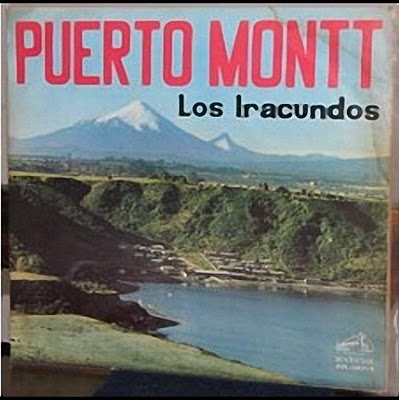
This is actually pretty old. I remember my father, who was a radio man, telling me about the key to the success of the Uruguayan band Los Iracundos (famous in Chile for their song Puerto Montt). In the sixties Los Iracundos racked up an impressive number of hits and number ones on the pop music charts. The key was that they wrote a huge number of songs, which they tested every week on local radio. If the song worked, then it was recorded and distributed by RCA, their label.
The measure-and-react strategy is behind the mechanisms of crowdsourcing. There are news websites that maintain a large pool of contributors working as volunteers, and that analyze which articles capture the most interest from their audience, and based on that, together with the analysis of searches and navigation on the site, decide which topics to write about in the site’s main articles. The same approach is used to moderate forums and avoid problems like trolling. They keep restricted versions of the forums, monitored by volunteers who take care of filtering these small groups before their content is passed on to the open forums.
All of this is very interesting, and it seems to work, but it forces us to ask a question: if we rule out predicting the future, and we have seen that we aren’t able to satisfactorily explain the past either, can we “predict the present”? That is another interesting chapter of this entertaining exploration.
Taken from Wikipedia http://es.wikipedia.org/wiki/Henry_Mintzberg ↩︎
Comments
comments powered by Disqus