$ cat posts/the-strategy-paradox.md
The strategy paradox
“The best way to predict the future is to invent it” – Alan Kay
The story of Betamax versus VHS is well known. Sony focused on picture quality, and developed a closed format. Matsushita, on the other hand, developed a lower-quality technology with VHS, but one that allowed longer recordings, long enough to record entire movies. On top of that the standard was open, which let multiple manufacturers compete at building devices, and that drove prices down. When the video rental market exploded, VHS held a slight lead, and through a process of cumulative advantage it ended up winning.
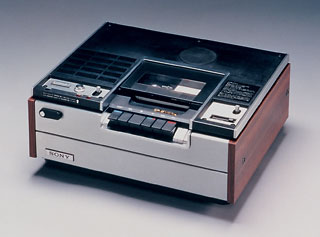
Betamax player
But Sony had not conceived of the video recorder as a device for watching rented movies. In the Japanese company’s vision, people would use the Betamax to store television shows. In fact, back then there had been experiments with movie rentals that had failed. Sony’s vision was not crazy. Even so, once it was clear that people were using VHS to watch movies, it developed the Beta II format, with longer recording time, but it was already too late. The flaw in the strategy was that shift in demand, which was faster and more unexpected than anyone in the industry could have anticipated.
Years later Sony made another big technology bet with its MiniDisc players. Since they did not want to make the same mistake twice, they tried to avoid the failures of Betamax. MiniDiscs had the capacity to record entire albums, and with the creation of Sony Music they made sure to acquire a content catalog that would guarantee the success of the new medium. MiniDiscs had several technical advantages over the CDs of the time: MiniDiscs were recordable, CD burners were more expensive back then, and MiniDiscs were smaller and tougher. It was a medium destined to be a bestseller. So what happened? In essence, the Internet. Memory costs dropped, and people could store the music they wanted on their personal computers. High-speed internet connections started to spread, peer-to-peer file sharing systems appeared, then pen drives, flash drives, websites for downloading to portable devices, formats like mp3. Nobody could foresee what would happen with the internet. Sony did the best it could to avoid the failures of the past, it learned from its failed strategy, it tried to anticipate the future, it even tried to invent the future (Alan Kay style), but it was defeated by forces it could neither predict nor control.
The surprising part is that Apple got it right, with its iPods and the iTunes store, even though it used the same kind of strategy as Betamax, similar even to its own past experience in the 1980s when it competed against the PC. The iPod was a bigger, more expensive device, with a closed architecture that Apple refused to license, running proprietary software, and on top of that it was resisted by most content providers. So why did Apple do better than Sony?

First-generation iPod
Apple had a great product, just like Sony. Both companies looked into the future as best they could, to spot the technology trends. They made their decisions, set their strategies, and executed their plans brilliantly. The only difference is that Apple’s strategy worked and Sony’s did not. This is the strategy paradox, according to Michael Raynor, described in his book The Strategy Paradox. The success of a strategy depends on whether the vision of the future laid out at the start turns out to be right or not, something that is not only impossible to know, but impossible.
The solution to the strategy paradox, according to Raynor, lies in openly acknowledging that there are limits to what can be predicted, and therefore developing methods for planning within those limits. In particular, he recommends incorporating “strategic uncertainties”, that is, laying out possible scenarios, speculations, hypothetical stories about the future. Raynor’s proposal is quite radical: in his view the heads of companies should be permanently thinking through future scenarios, and should drop operational management, leaving it to a lower layer that takes care of optimizing and operating the established strategies.
Managing strategic uncertainties can be an interesting exercise, one that lets us handle various possible scenarios, and perhaps get ahead of some of the future’s surprises. But all of this involves making predictions, and we have already seen that making predictions is problematic. If planning is a problem, there must be another way, and there is one, a way that puts less emphasis on anticipating the future, or the multiple possible futures, and concentrates more on reacting to the present. That is something we will look at soon.
Comments
comments powered by Disqus