$ cat posts/the-energy-efficiency-paradox.md
The energy efficiency paradox
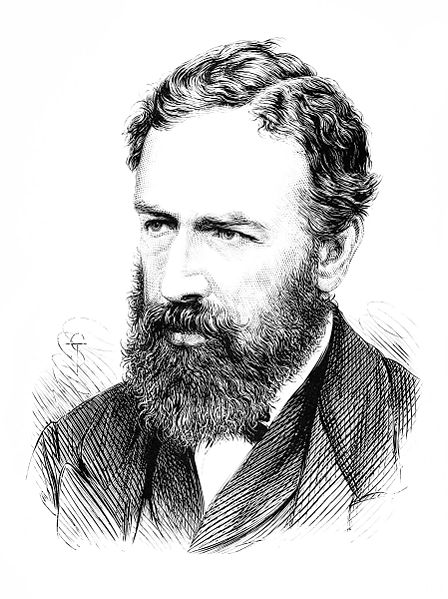
In 1865 the English economist William Stanley Jevons observed that the technological improvements that increased the efficiency of coal use led to an increase in the consumption of that mineral. Jevons argued that, contrary to common intuition, technological improvements would not bring about a reduction in fuel consumption.
The Jevons paradox, or the Jevons effect, says that as the technology that increases the efficiency with which a resource is used gets better, consumption of that resource is most likely to go up, not down.
In simple terms: more efficient engines, more fuel consumed. Energy efficiency? The greater the energy efficiency, the greater the consumption, and the need for new sources of power generation (dams, thermal power plants, etc.)
Mathematically:
If Ef > Ei then Cf < Ci, but Ci * Ei * Ni << Cf * Ef * Nf
E: is the efficiency of consumption
N: is the number of consumers
C: the instantaneous consumption
i: indicates the initial state, f the final state.
Economists call it a paradox because it goes against the economic intuition that greater efficiency implies lower consumption.
There is a parallel in information handling: the more efficiently we handle information, the greater the demand to process information, and the more new information gets generated, which needs to be processed in turn. “Computers, instead of lightening our work, end up making us work more” :wink:
In the eighties, in the first places I worked, there were 1 or 2 computers. Today everybody has one. Energy consumption for computerization and support of administrative work went up by one or two orders of magnitude.
In the 1980s, the economists Daniel Khazoom and Leonar Brookes postulated that: “energy efficiency improvements that, on the broadest considerations, are economically justified at the microlevel, lead to higher levels of energy consumption at the macrolevel.”
The Khazoom-Brookes postulate was analyzed by Harry Saunders in 1992, who found the conditions under which this hypothesis holds, following the analysis of neoclassical economic growth theory.
In other words, the idea that efficiency is the solution to our energy consumption problems is of doubtful validity. The only way to slow the growth in energy consumption would be to shrink the economy, that is, to stop growing. Another way is to intervene directly in the market to regulate consumption, with taxes, for example.
There are economists who suggest that what should be done is to tax energy consumption, and that those taxes can be reinvested in the restoration of “natural capital”.
What the Jevons effect tells us is that the idea of energy efficiency alone is not enough, and that sustainable energy policies need other kinds of government intervention.
The question is whether the authorities are aware of this effect, and whether those who promote energy efficiency as the only solution to the problem are too.
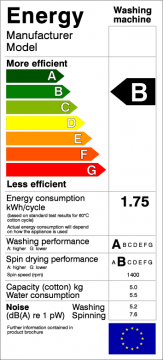
By the way, this shows up in the rebound effect, which worries a number of economists, and certainly groups like the BreakThrough Institute, which in February published a report studying this phenomenon.
Comments
comments powered by Disqus