$ cat posts/trust-and-anarchy.md
Trust and anarchy

Direct interaction with the user, building trust, anarchy: the keys to this talk by Fred George on infoq, which I recommend: http://www.infoq.com/presentations/Leaner-Programmer-Anarchy
For entirely accidental reasons, I am in the middle of a process of anarchy with one of my teams. There is no “project manager” in charge of this team of 4 developers. Right now they report directly to me, but they are literally working without a manager.
We commit many of the heresies Fred George proposes, and not because we are ultra-modern and experimenting with lean or post-agile methodologies. We simply have to get the work done. And the interesting part: I have observed that trust in this team’s ability has gone up, mainly among our internal customers.
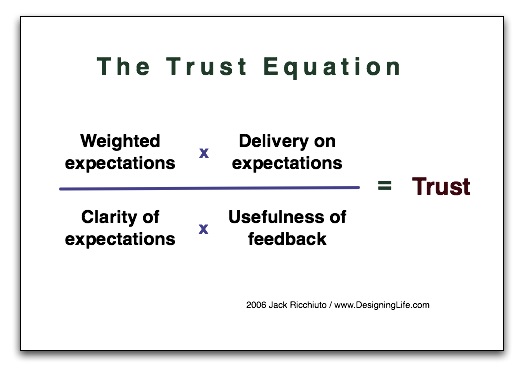
Here is a short description of what we are doing:
There are no sprints and no kanban board, but we use Jira to record what we have to do and to know who is on what. There are no standup meetings, no user stories, no estimates, not even coordination meetings.
They make their own decisions, they are autonomous, they keep me informed, but there are no bureaucratic barriers. They come to me to unblock whatever is keeping the work from getting done. My role is to facilitate and to get the other areas to commit so we can meet our deliveries.
The only significant bureaucratic barrier is in the releases to production.
The concept of QA is fuzzy. There is no QA team; the end user tests the new features on the development environment and gives immediate feedback. Going through the QA environment is almost a formality, a step to bring the environments in line (which calls a lot of the internal procedures into question, but I have decided to put that fight off).
We increased the interaction between end user and developer. The developers spend a lot of time sitting with the user studying the problem and proposing solutions that even the user had not envisioned.
The developer is: functional analyst, architect, designer and programmer.
Date commitments: we deliver when we commit to.
Worse is better: what gets delivered is usually less than 100%, but it is usable.
We have managed to increase trust, and that is what has surprised me most. The users feel they are finally getting applications that are closer to what they needed.
An example: an application’s spec said it had to “upload files by means of a button”. The implementation, which had been in production for more than a year, did that, but it only allowed uploading one file at a time, and while the file was uploading the user was unable to do anything else. What the users actually needed was to schedule a series of multiple uploads. The developer, by sitting down with the users and watching what they did, understood the serious usability problem of the application as it stood. The result was that in the next release he brought them, as a surprise, an improved interface that left the user free to do other things with the computer (the user never asked for that improvement; it was offered “for free” by the developer).
The big problem with the heavier methodologies is that between user and developer there are many barriers: End User -> Boss -> Stakeholder -> Sponsor -> Project Manager -> Functional Analyst -> Designer -> Architect -> Programmer.
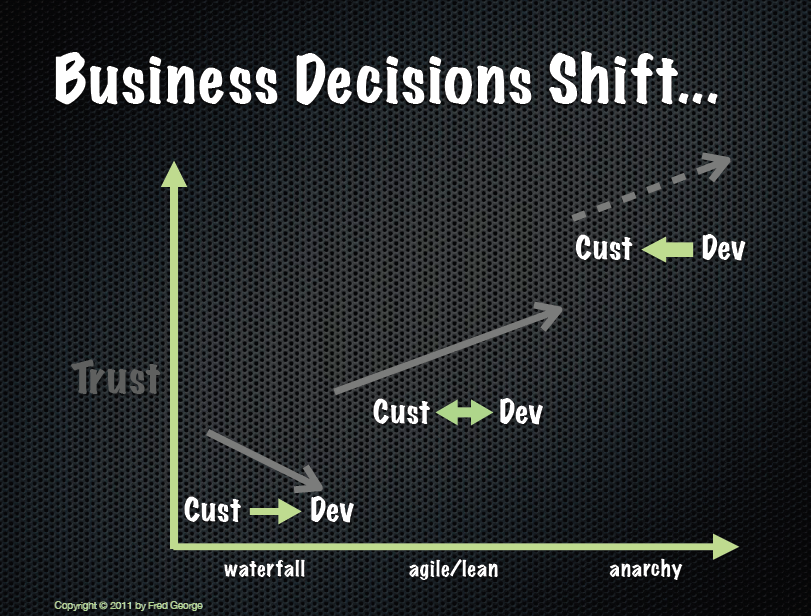
The shift in business decisions according to Fred George
The interaction should be End User <-> Developer. That improves understanding, the communication of the problem, and trust. In the end, this interaction emerges: End User <- Developer; it is the developer who ends up offering new features to the end user.
Things I like about Fred George’s presentation, and that in a way I have conveyed on this blog:
We need results, not explanations, and not a hunt for someone to blame. This thinking eliminates estimates, retrospectives, iterations, and all that “waste” that agile methodologies end up generating.
Standup meetings and stories can be replaced with more interaction with the user.
Fewer roles. Collapse all those functions into a single one: developer. Even the manager disappears. In the end what we need is to hire good programmers.
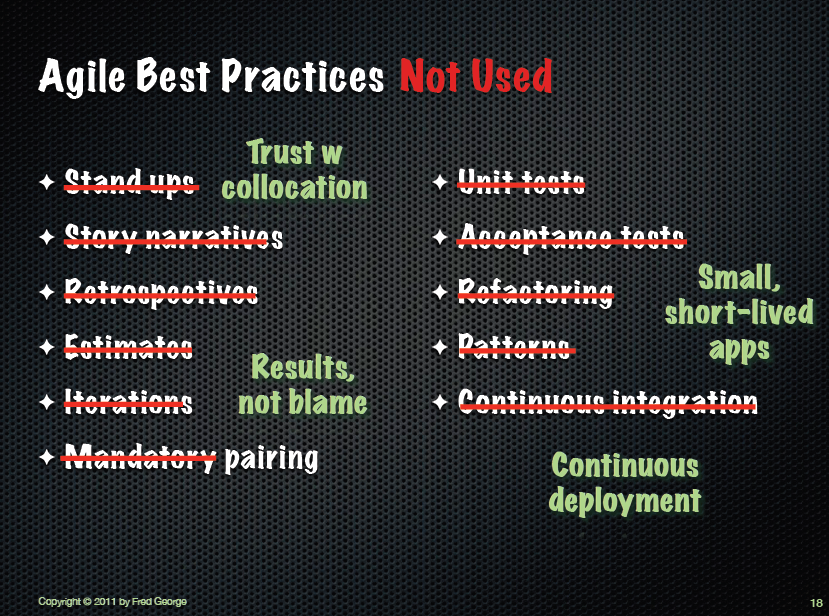
Agile best practices not used
The value of building trust between the developer and the user is, in the end, the great lesson of this experience, and what Fred George gets across in his talk. Once again I invite you to watch it, to study his heresies, and to put them into practice.
A cynical reader could criticize me and say that I am not really managing, and that this anarchy will end up costing me. The truth is I never planned to follow this strategy; I have always worked this way :). I am a committed anarchist, and my experience has shown me that plenty of projects can be carried through like this. What happens is that people get nervous when there is no structure, planning and all that, especially engineers, who are the most nervous of all. Don’t worry so much, and trust.

Comments
comments powered by Disqus