$ cat posts/on-the-properties-of-unicorn-horn.md
On the properties of unicorn horn
Years ago, when my friend Maz and I managed to
develop world-class biometric technology, certified to high
international standards, and after receiving an innovation award from
the national industry, we knew the next step was to get the core
technology of our solution to stop depending on foreign products. On
the hardware side we figured there was little we could do, so we went
after the development of biometric identification algorithms. We were
no longer in a position to keep doing the research ourselves, so we
turned to academia.
And with the support of Reuna (Chile’s academic network) we managed to
raise a state fund for the development of biometric algorithms. Nobody
from the big universities was interested, and the work was done with
regional universities. It was when the amount became known (close to a
million dollars) that our academic friends at the Universidad de Chile
and the Católica started calling us. We even gave talks and classes at
their invitation (it seems the ability to land funding gives off a
certain kind of pheromone).
Despite the goodwill and the effort, the project did not achieve what was expected, partly because the company dissolved (not because it was doing badly, the story is longer and more complicated) and partly because the academic contribution was not what we expected (not across the board, but this was a project to develop software, not to do research and train themselves, and that mismatch explains its limited success in my opinion). In any case the experience helped me understand a lot about the mechanisms that drive academia, and about collaboration between the university and industry.
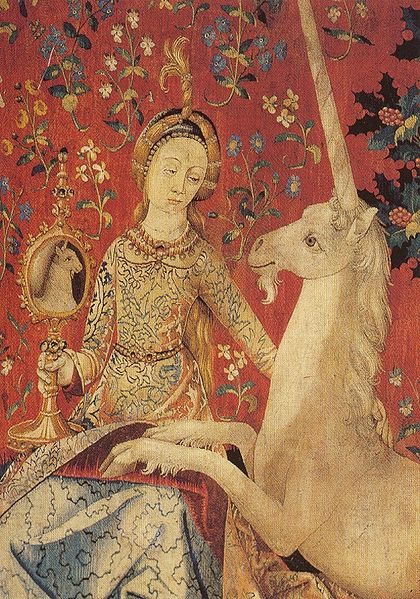
If unicorns existed, their horn would surely have magical and healing properties. Unicorn horn is what is known as a panacea, a word that, according to its etymology, means “cure-all”.
There is an antipattern called The Golden Hammer, which comes from Maslow’s aphorism that says "it is tempting, if the only tool you have is a hammer, to treat everything as if it were a nail".
Well, the idea that Chile needs more PhDs, or that having more PhDs is good for the country, sits somewhere between the panacea and the golden hammer.
Jo Piquer, my old and admired professor, is for many a mythological hero, a demigod who dwells in the land of unicorns, and he has published a note on the value of PhDs. Since he is kind enough to name me as the supposed inspiration for his post, I can only be proud. After all, I am a mythological being too: I dwell in the world of the Socratic gadflies and the sképticoi.
And believe it or not, I agree with what Jo says. It is not that I don’t believe in the value of PhDs. I do believe in the value of PhDs, just as much as in the value of the healing properties of unicorn horn. As Jo says, there is a correlation between the level of research in a country and its level of development, but there is also one between global warming and the decline in pirates (I mean the ones with the eye patch and the peg leg).
Jokes aside, the problem is that we approach this issue of the country’s development the way we always do in this country, looking for panaceas, magic bracelets that will bring us prosperity, without realizing that much more than that is required, that it takes work and effort on many fronts.
Advanced research is useless if it is not linked to the country’s own productive processes. Training a few PhDs is useless if the level of engineering education keeps declining. If primary and secondary education is of dreadful quality. Bringing in more PhDs will solve nothing if companies don’t understand what a PhD contributes (by the way, at Biokey we did high-level research without any of us being a PhD, so the argument about the research rigor one of these programs produces strikes me as irrelevant. Research rigor can be developed earlier, starting in primary school; it is not something people should have to learn at 25).
In the words of Jo Piquer:
“we must create an environment for our PhDs to fit into, so as to generate the necessary climate of cooperation between science and industry. Ideally, many of these PhDs would go into industry to develop private research laboratories and show how these efforts can generate value in the company, and would themselves generate new thesis projects for future students. For that to work, we must encourage doctoral thesis topics to be related to the needs of the country, ideally to some particular industry. That way, from the start of the thesis the student understands the real problems and finds it easier to later join that same industry."
That is part of what we need, yes, I back his words, but it is not enough. Let it not turn into a panacea. After all, we would also need to have an industry (another mythical being) to link the research and development phase to.
I am not saying PhDs have no value, but they have value in a broader context, in a country that understands what they contribute. For that we have to come down from the clouds and look at reality. There are many things we need to do first, and the best of our young people should put off their dreams of academic glory for a while and devote themselves to building things and preparing the ground so the unicorns can graze. Otherwise we will just have pretty unicorns locked up behind the gates of the Lagado Zoo, without our benefiting from their magical powers.
Comments
comments powered by Disqus