$ cat posts/the-man-who-saved-the-world-by-not-doing-what-he-was-supposed-to.md
The man who saved the world by not doing what he was supposed to
As usual during the summer I recycle a few articles. This time it is a post from September 2008, with the story of Stanislav Petrov:
The man who saved the world because he didn’t do what he was supposed to do
It was September 26, 1983. Lieutenant Colonel Stanislav Petrov was on duty in the secret bunker outside Moscow that monitored the Soviet satellite early warning system when the alarms went off shortly after midnight. One of the satellites was reporting that the United States had launched five ballistic missiles at Russia.
Tensions between the two countries were high. The alarm coincided with the start of some provocative NATO military exercises, and came barely three weeks after the Russians shot down a South Korean civilian airliner that had strayed into Soviet airspace.
Petrov’s instructions were clear: if he detected missiles headed for the Soviet Union, he was to push the button that launched the counter-offensive.
“It was like in the movies,” says Petrov, a blinking red button waiting to be pushed, except “in the movies, Hollywood specialists and directors can stretch a little situation into half an hour. In our case, from the time I made the decision to when it was all over, it was five minutes max.”
But he decided to do nothing. He had a hunch that something was wrong. And he was right: months later, it was determined that the signals were the result of a system glitch.

The start button, which Commander Petrov was expected to push, would have started an irreversible chain reaction in a system designed to launch a counter-strike without human intervention.
“The main computer wouldn’t ask me [what to do] — it was made so that it wouldn’t even ask. It was specially constructed in such a way that no one could affect the system’s operations.”
All Petrov could do was analyze the available information and decide whether the alarm was false, or give the computer the go-ahead, following a directive he himself had written.
But why didn’t Petrov push the button?
Two thoughts came to his mind:
“I just couldn’t believe that just like that, all of a sudden, someone would hurl five missiles at us. Five missiles wouldn’t wipe us out. The U.S. had not five, but a thousand missiles in battle readiness. It just didn’t seem like any scenario considered by military intelligence before.”
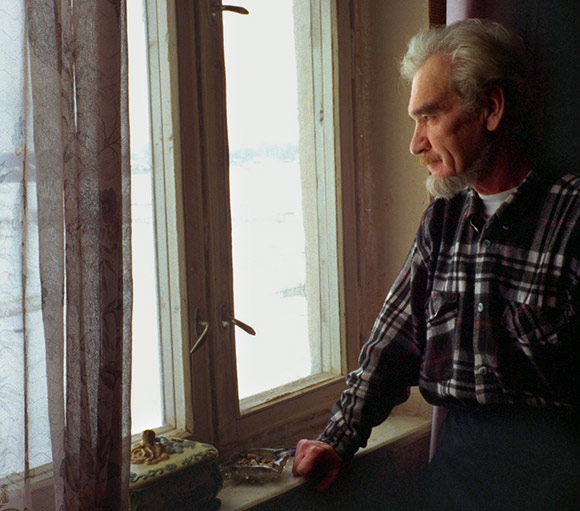
The second thought on Petrov’s mind, one he always considered whenever he was on duty, was this:
“I imagined if I’d assume the responsibility for unleashing the third World War — and I said, no, I wouldn’t.”
We owe Petrov our thanks for what he did; he is an unsung hero of our time. But above all he shows us that we cannot blindly believe “what the system says”.
In the end we are capable of thinking, and of making decisions that computers, however sophisticated and however well programmed they may be, are still incapable of making for us
Comments
comments powered by Disqus