$ cat posts/the-memorandum.md
The memorandum
Washington 25, D.C. April 23, 1963
Memorandum
For: Members and Affiliates of the Intergalactic Computer Network From: J. C. R. Licklider
Subject: Topics for Discussion at the Forthcoming Meeting
That is how one of the most interesting, and probably one of the most influential, documents in the history of technology begins: the famous Memorandum for Members and Affiliates of the Intergalactic Computer Network, by Joseph Carl Robnett Licklider.
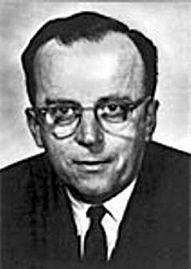
When I read this memorandum(1) I found a use case that describes the need for distributed operating systems, for defining “languages” that allow interoperability between different systems, RPC, remote process execution, the description of a service-oriented architecture, integration between multiple programming languages (a Fortran program can call routines written in Algol that live on another machine somewhere on the network), the description of virtual machines (in the sense of the JVM, or .Net’s CLR), libraries loaded dynamically at run time (DLLs, .so), the concept of the mashup!, the concept of cloud computing (which node of the network runs a task is transparent to the user) and no end of other elements, some of which we are only now developing. Please read it; here it is.
Most important of all, this memorandum, along with Licklider’s inspiration and influence on Ivan Sutherland and Robert Taylor, was what drove the creation of ARPANET and, later, the Internet. There is a line that runs from Vannevar Bush to Tim Berners-Lee, and it passes through Licklider.
But Licklider had a vision that is partly captured in that memo and spelled out in more detail in a 1960 paper, published in the IRE Transactions on Human Factors in Electronics, called “Man Computer Symbiosis”:
Symbiosis
The fig tree is pollinated only by the insect Blastophaga grossorun. The larva of the insect lives in the ovary of the fig tree, and there it gets its food. The tree and the insect are thus heavily interdependent: the tree cannot reproduce without the insect; the insect cannot eat without the tree; together, they constitute not only a viable but a productive and thriving partnership. This cooperative “living together in intimate association, or even close union, of two dissimilar organisms” is called symbiosis.
“Man-computer symbiosis” is a subclass of man-machine systems. There are many man-machine systems. At present, however, there are no man-computer symbioses. The purposes of this paper are to present the concept and, hopefully, to foster the development of man-computer symbiosis by analyzing some problems of interaction between men and computing machines, calling attention to applicable principles of man-machine engineering, and pointing out a few questions to which research answers are needed.(*)
Licklider called this vision Machine-Aided Cognition (MAC), and it took shape as a project at MIT, Project MAC, which included building an operating system that would implement multitasking, filesystems, regular backup policies, time sharing and multi-user environments. In fact, C and Unix were a reaction: a way of carrying out Licklider’s program more simply (remember worse is better?).
Licklider was an inspirer, a man who had the chance to lead and connect a group of brilliant minds. His intergalactic network was a network of people who, under this thinker’s influence, made great contributions to information technology. From the PC to the internet, every one of those technologies carries the influence of Licklider’s ideas. That is what I call motivating.
Notes:
(*) I promise that one day I will write something about this paper of Licklider’s, because it is very interesting.
\(1\) I learned Licklider’s story from this remarkable post by Jeff Moser.
Comments
comments powered by Disqus