$ cat posts/software-everywhere-internet-of-things-post-bicentennial-chile.md
Software everywhere: the Internet of Things in post-bicentennial Chile
Table of contents
By Luis Ramírez (*)
What is the future of the Internet? I am convinced that the semantic web is just a way of deepening (improving?) how we relate to existing data. The Cloud? More of the same. In my opinion, what will truly amount to a significant innovation is taking the Internet out of traditional devices and embedding it in unconventional ones. During this decade we will see the rise of this second Internet, where anything at all becomes a “Smart Object” able to communicate with the network at any time and from any place. That, more than anything else, is where I believe the future of the Internet lies.
2010-2020 will be the decade of the “Internet of Things”
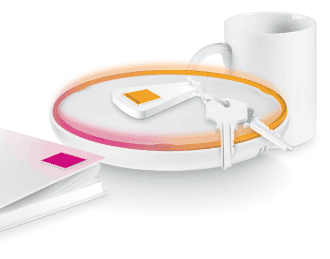
What would have to happen between now and 2020 is the mass adoption of low-cost chips that can be embedded in almost anything (including household objects like refrigerators, or vehicles) and applications that allow not only two-way data transmission, but also give those objects the ability to connect to the Internet.
This is a big leap that opens up unsuspected possibilities. My favorite example is the toll tag we use on some highways in Chile. Today this device is very basic. In the near future, it could trigger all kinds of functions, whether in our homes, as we get close to the house, or with service providers.
How do we move forward? Rolling out the new version of IP (version 6, or IPv6) is no longer a matter of choice but of necessity. The current situation, with IP addresses about to run out even under strict management, means we are living through the last three or four years before the “forced changeover”.
Leading companies worldwide are already working on that transition through the “IPSO Alliance”, which brings together 27 of the industry’s main players, including Intel, Sun, Cisco and Google. The European Community’s interest is also plain to see, while pioneering nations like South Korea and Japan have been experimenting for years. In short, everything indicates that the Internet of Things is already under way worldwide.
Are we ready in Chile? Short answer: not for now, but we have started to make progress. There are favorable factors and others that complicate the picture a bit.
Favorable factors in Chile
Widespread networks: Not only do we have a reasonable deployment of fixed networks, but mobile networks have grown at rates far above expectations. On top of that, one operator (ENTEL) has taken on the rural connectivity project, which means that by 2012-13 we will have radically greater coverage in the regions and in isolated areas. In one sentence: by 2014 Chile will have the best network infrastructure from Mexico to Patagonia.
IPv6 Project: The initiative, led by NIC Labs with backing from the Undersecretariat of Telecommunications (SUBTEL) and several companies, has set out to design a “Strategic Plan” for Chile’s transition to IPv6. The goal is to have it in 30 months, so it is likely that by mid-2012 we will have absolute clarity on how to start the rollout.
Interest from industry leaders: During the early years of the first Internet, companies were rather cautious, but the fact that they are now actively taking part in the IPv6 project (for now Claro, Entel, Movistar, Telmex, VTR and Cisco) looks like a good sign. Besides, these and other players have reached sizes that let them experiment with new technologies (LTE, for example) and bet a little more on innovation.
Limiting factors
Government and National Congress: Here I think we have a major bottleneck. Somebody correct me, but I haven’t heard a single member of Congress or minister mention the subject. As far as I know, the President has never made any reference to it either. Security and Privacy: As has been raised in international discussions, there is a significant level of concern over the privacy of the data that will circulate in this new ecosystem. It is likely that users’ own misgivings will limit the possible uses in the first few years, perhaps much as happened when e-commerce took off.
Conclusion
The implications of this article make no sense if you look at them from a short-term perspective (2010). The underlying discussion has to be framed across the entire decade. The important changes will come in no less than five years. We have to do what we can so that it takes no longer than that.
In the end, I’ll stay with this quote, an optimistic one to be sure: “Chile can take a leading position worldwide both in the software development market and in the development of innovative products that use the Internet as a means of communication between devices, as well as being able to lead the implementation of IPv6 in the region.” (IPv6 Project, NICLabs, Chile)
The question is not whether the “Internet of Things” will happen or not, but how long the transition takes us. If we are more effective than we were in rolling out the first Internet, in less than a decade Chile could become a regional leader of this new Internet. For that to happen, beyond chips and regulation, there is an enormous challenge ahead for software developers and everyone involved in the computing industry, which boils down to how to provide locally relevant solutions that can adapt to devices of any kind.
Ubiquitous Internet also means ubiquitous software. That seems to be where the future is coming from.
Recommended reading
The second Annual Internet of Things conference report:
“A Roadmap for Europe” (June 1st & 2nd 2010, Brussels)Kranz M, Holleis, P and Schmidt, A (2010) “Embedded Interaction: Interacting with the Internet of Things” IEEE Internet Computing, March-April p.46-53
Kloch C, Kristensen J E, Bilstrup, B (2010) “Future Scenarios: What are the Future Services and Applications?“Wireless Personal Communication Volume 53, Number 3, 315-327
(*) Luis Ramírez has spent several years working, from academia and from activism, on issues related to Internet access and the social implications of ICTs. He holds postgraduate degrees from the Universidad de Chile and the London School of Economics.
(**) Luis kindly agreed to contribute as part of the celebrations for five years of La Naturaleza Del Software. Thank you, Luis, for your interesting contribution.
Comments
comments powered by Disqus