$ cat posts/ask-parnas.md
Ask Parnas
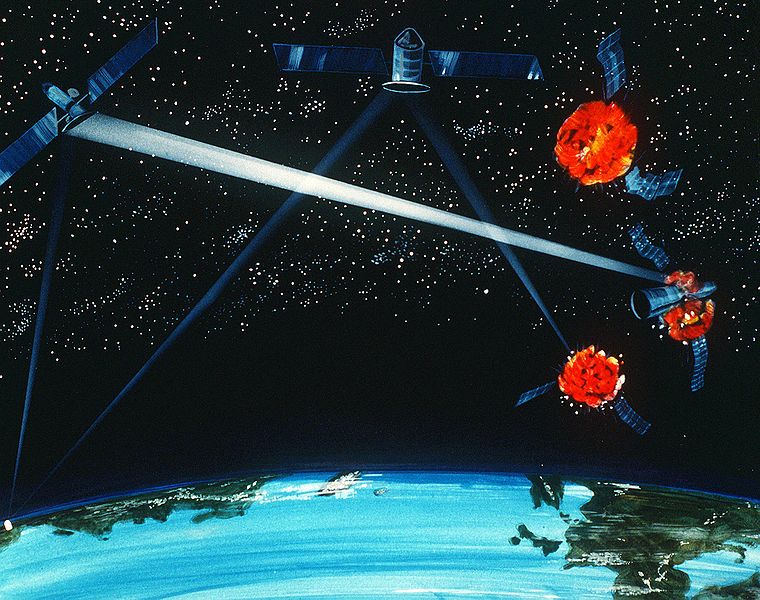
In 1985 Ronald Reagan proposed the Strategic Defense Initiative, SDI, which came to be known as Star Wars, after the George Lucas movies.
Essentially, SDI consisted of a shield made up of a network of satellites to detect missile launches and a series of anti-missile weapons, with high-energy lasers, in charge of destroying those missiles in space before they reached American territory (all of it over our heads, of course).
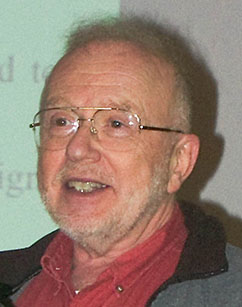
At the time David Lorge Parnas, a major pioneer of the field of software engineering and a professor at the University of Victoria in British Columbia, was a consultant with access to military secrets at the Office of Naval Research in Washington. He was one of the nine scientists called by the SDI central office to take part in the “Panel on Computing in Support of Battle Management”.
In a letter of resignation from the panel, accompanied by 17 memoranda, Parnas declared that it would never be possible to realistically test the vast array of computers responsible for linking and controlling the systems of sensors, weapons, guidance and aiming systems, plus the battle stations.
According to Parnas this was even harder to achieve by following the traditional methods of software development, in which “bugs” and errors are only detected in the day-to-day use of the systems. “I believe it is our duty, as scientists and engineers, to reply that we have no technological magic that will accomplish that. The President and the public should know that,” was part of what he said.
Professor Parnas wrote that he was sure other experts would disagree with him, but that many would see this program as the “pot of gold” for funding research projects, and others as an interesting intellectual challenge. That, of course, is not the ethical path, and Parnas was very clear about it, even though the arguments he used to defend his position were strictly technical. That is why Parnas became one of the people I admire most in my profession.
You can read his article “Software Aspects of Strategic Defense”, published in the December 1985 issue of CACM.
“My conclusions are not based on political or policy judgments. Unlike many other academic critics of the SDI effort, I have not, in the past, objected to defense efforts or defense-sponsored research. I have been deeply involved in such research and have consulted extensively on defense projects. My conclusions are based on more than 20 years of research on software engineering, including more than 8 years of work on real-time software used in military aircraft. They are based on familiarity with both operational military software and computer science research. My conclusions are based on characteristics peculiar to this particular effort, not objections to weapons development in general.”
The article contains the memoranda that accompanied his letter of resignation, and is divided into 8 parts:
- The fundamental technological differences between software engineering and other areas of engineering and why software is unreliable.
- The properties of the proposed SDI software that make it unattainable.
- Why the techniques commonly used to build military software are inadequate for this job.
- The nature of research in software engineering, and why the improvements that it can effect will not be sufficient to allow construction of a truly reliable strategic defense system.
- Why he does not expect research in artificial intelligence to help in building reliable military software.
- Why he does not expect research in automatic programming to bring about the substantial improvements that are needed.
- Why program verification (mathematical proofs of correctness) cannot give us a reliable strategic defense battle-management system.
- Why military funding of research in software and other aspects of computing science is inefficient and ineffective.
The article, or series of articles, is a real lesson in software engineering.
Parnas avoids technical jargon, so you do not need to be a programmer to read it.
But the most important thing is that Parnas gave an important lesson in ethics, because he believes that ethical people should work on projects they think have unethical aspects. This way they might be able to have some influence on keeping things ethical, and they also have an obligation to inform themselves of the risks and benefits of such projects1.
His stance made him the first person to receive the Norbert Wiener Award for Social and Professional Responsibility, given by CPSR, Computer Professionals for Social Responsibility.
Norbert Wiener, the father of cybernetics, wrote the following text, quoted by Terry Winograd at the ceremony where the award was presented to Parnas:
“Any machine constructed for the purpose of making decisions, if it does not possess the power of learning will be completely literal-minded. Woe to us if we let it decide our conduct, unless we have previously examined the laws of its action and know fully that its conduct will be carried out on principles acceptable to us!
On the other hand, the machine like the djinee, which can learn and can make decisions on the basis of its learning, will in no way be obliged to make such decisions as we should have made, or will be acceptable to us. For the man who is not aware of this, to throw the problem of his responsibility on the machine, whether it can learn or not, is to cast his responsibility to the winds, and to find it coming back seated on the whirlwind.”2
Is software the genie in the bottle? Are we responsible enough to control it?
I invite you to read Parnas.
Compare this text by Wiener with what Kaczynski argues (the challenge of the new Luddite) about letting machines make their own decisions. ↩︎
Comments
comments powered by Disqus