$ cat posts/the-ballad-of-john-henry.md
The ballad of John Henry
Legend has it that John Henry was a freed black slave, a man of incredible strength who, after the American Civil War, went to work building the railroad. He was the best worker on the line, the strongest and the fastest.
One day a machine arrives, a steam drill, brought in to bore
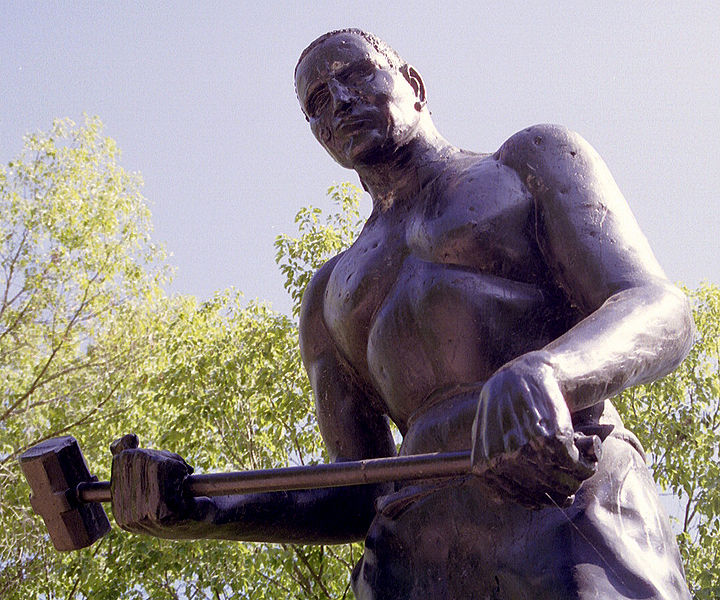
a tunnel, a machine capable of replacing the whole crew of workers. To defend his job, and his companions’ jobs, John Henry proposes a challenge to the foreman: he will race the machine, drilling through the mountain.
The foreman accepts, and John Henry gets ready. His wife comes to watch the feat, and although her name does not always match from one version of the tale to the next, in all of them she is dressed in blue. The man says goodbye to his wife, tells her where his savings are, takes his little son in his arms, and explains that the great tunnel he is about to build will be the death of him.
With two enormous hammers in his hands, the man starts that impossible race. Fast as the machine is, John manages to pull several yards ahead of it. The machine stops, breaks down, unable to go any further, and John makes his way through the mountain, finally opening the tunnel.
John Henry has beaten the machine, only to fall at the end, his heart giving out from the effort. His wife runs to his side. “I will always be true to you,” she tells him, before he dies in her arms.
John Henry is a hero of American folklore, especially among African Americans and the working classes. “A symbol of the marginalization of workers at the end of the 19th century. He is the clearest illustration of the futility of fighting technological progress. Some have proposed that he is an example of how many of the best and most skilled workers are marginalized when companies are more interested in efficiency and production than in their employees’ health and well-being.
Although John Henry proved himself more efficient than the steam drill, he worked himself to death and was replaced by the machine anyway.” [1]
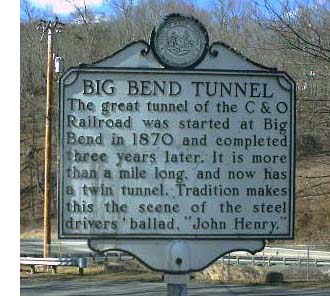
I read the story of John Henry many years ago, and it made an impression on me, and it still does. You can read more about this legend at this site, or listen to the many songs, ballads and blues written around this mythical character.
Some fights are just, and it is clear that technology often ends up displacing work, especially manual work. A large part of structural unemployment is a direct effect of technological efficiency. A lot of human labor has been replaced by technology, and technology makes it possible to replace crews of John Henrys with a single man.
Much of this was behind the original Luddite movement, but that is another story….
[1] This account is an adaptation of various songs and poems about John Henry, taken from this site.
[2] Wikipedia, free translation
Comments
comments powered by Disqus