$ cat posts/why-do-computers-take-so-long-to-boot.md
Why do computers take so long to boot?
It’s a good question. An anonymous Slashdot reader asks:
Why Do Computers Take So Long to Boot Up?
In English the startup process is called bootstrapping.
“Bootstrap is the English term for a loop made of leather or sturdy cloth attached to the back of tall boots. Pulling hard on the bootstrap lets you get the boot onto your foot.”
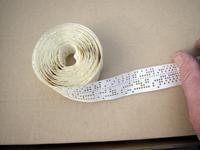
The term is old, and comes from the days when you needed a small program that could load bigger programs into the computer’s memory from cards or a paper tape. I have a childhood memory of my father showing me a computer terminal into which he fed one of these punched tapes, like the one in the picture.
Believe it or not, boot times have improved a lot. Today we complain about 30 seconds or more, but back then, at least personally, I got to see plenty of slower systems.
I remember that my first computer (a ZX81) didn’t have the long startup time of my notebook, or of many computers I use today. After you switched on the ZX81 the screen flashed and the system was ready to take instructions, typically with a question mark.
However, if you wanted to load a program, a game for example, you had to hook up an audio cassette and start the process of reading the program, which could take several minutes, and which sometimes failed. Over time you learned to tell the cassette’s beeps apart and predict whether there would be a failure. With that knowledge, a screwdriver and enough skill, you could move the tape deck’s heads, tightening or loosening them, so that the loading process improved.
I remember that the first computing project I took part in at my school, a tourism database for the Antofagasta region, needed about 45 minutes to load (with fingers crossed), and that was with the system holding less than 64 kilobytes of information (yes, kilobytes).
All in all, this bootstrapping business lets me examine the notion of technological progress a bit further, and I think it’s worth continuing to analyze the subject in the next few articles.
Comments
comments powered by Disqus