$ cat posts/salamander-legs.md
Salamander legs
Table of contents
My maternal grandmother, who died recently, suffered from Alzheimer’s. When I learned she had it I got worried, because I assumed it was a genetic condition and that I therefore stood a chance of ending up with the same thing. The same happened to me with cancer, since my father and my paternal grandmother both died of it at around 40. I now know that statistically there is a 1 percent chance that I will develop that cancer, but I also know that the type of cancer in question is treatable today, and has a very good prognosis if it’s diagnosed in time, so I have to get my health checked fairly regularly. The bad part is that the exam is rather unpleasant. But in the case of Alzheimer’s the probability isn’t clear. The truth is that my grandmother’s daughters have a 50% chance of developing Alzheimer’s, but they must also carry certain mutations on chromosomes 1, 14 and 21. For me and my siblings the odds drop to 25%.
There is currently a test that looks for the presence of the APOE gene (apolipoprotein E) by analyzing the APOE alleles, especially the APOE e4 variant. Since we all inherit the APOE alleles from each of our parents, having 2 copies of APOE e4 in our genes means a high risk factor.
The torture of knowing
Would you take the APOE e4 test?
Personally, I wouldn’t. One reason is that even though it’s a risk factor, there are people who have 2 copies of e4 in their blood and never develop Alzheimer’s. The second reason is that we still don’t know for sure what triggers Alzheimer’s. It’s known that great suffering triggers Alzheimer’s, and that emotional stability is an effective prevention mechanism.
Politics and biotechnology
But what happens if a government decides that the cost of supporting a population with Alzheimer’s isn’t worth it, and makes the test mandatory? How many people could be branded as pariahs for having 2 copies of the e4 allele in their blood?
On the other hand, knowing how many people may end up with Alzheimer’s is an important piece of data, since an estimated 8% of the population will suffer from this disease. For insurance companies and for private and public health administrators this information is extremely valuable. For the government it’s no small matter either, considering that in our country the age pyramid is inverting, which means the population at risk grows by the day, something that is also happening in Europe.
This is one of the issues that
the politics of the future
has to worry about, a subject Sebastián Escobar writes about on
my brother’s blog.
The film Gattaca
Understanding evolution

These dystopian nightmares come from the fact that most people think of evolution as a mechanism of progress. When in reality evolution is a mechanism of adaptation. We are no better than a salamander, as one might conclude from the end of Mr. Escobar’s article.
The evolutionary difference between a salamander and a human is no greater than that between a fly and a centipede. Each is adapted to its ecological niche, and they are where they are for a reason. Salamanders are chordates, same as us, but we sit on different branches of evolution.
We have a different genome, and although we can define the level of difference between our genome and that of salamanders, each species contributes to nature’s gene pool. In fact the regenerative capabilities of salamander stem cells may help in the fight against Alzheimer’s and Parkinson’s.
When you cut the leg off a certain kind of salamander, it regenerates the lost limb completely. This kind of recovery is due to the particular nature of the stem cells this particular salamander has.
It may be that the mystery of how salamander legs regenerate holds the answer to regenerating tissue, such as neural tissue, leading to a cure for Alzheimer’s, Parkinson’s and so many diseases that ravage our elderly population above all.
Survival
Genetic manipulation is as old as humankind, or at least it showed up back in our nomadic days. The wolf was genetically manipulated through artificial selection, and we were able to create those faithful friends that dogs are. Corn, wheat, cows: all of them are the fruit of genetic manipulation and artificial selection.
Humans have always wanted to improve on nature, to live better, to fight against death.
In nature the weakest are left behind: the small injured fawn is abandoned by the rest of the herd and devoured by the hyenas.
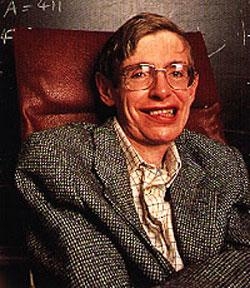
But we don’t abandon our people because they have defects, or at least we haven’t so far. One of the most brilliant people alive today suffers from a terrible degenerative disease of the nervous system. I mean Stephen Hawking. A man who tells us that God probably had no choices at the beginning of the universe, which shakes the foundations of many religions.
Why don’t we abandon our sick? Even when they can be as “impertinent” and “dangerous” as this celebrated physicist. Because as a species we know that our survival comes from the capabilities of our brain, and we have decided that even if one of our own is not physically fit, their mind is valuable to the whole group. In short, we know instinctively that a person, however bedridden, carries an intrinsic value that we can call soul, or mind, and that is very important for our survival.
That’s why we have looked after our elders, because we turn to them for the experience they have acquired. That experience, that Potential Intelligence, as I call it, is valuable and it is stored in them. That’s why, when one of our elders falls ill with Alzheimer’s, it’s a disaster for everyone. Because we don’t just lose contact with a soul; from a colder point of view, if you like, we lose potential intelligence.
Genetic software
In our struggle to survive as a species, we have investigated the genetic code. Today we know that the genome is one more piece of software.
Indeed, the genetic code can be encoded as a base-4 language, and from there on it’s a piece of cake for us computer people. Something biologists are only now understanding, and which has opened up a new branch of research called bioinformatics.

Today the world’s largest supercomputer, Blue Gene, is designed specifically to understand the mechanisms of protein synthesis. It is the fastest calculating machine ever built.
But for a software developer the question is obvious: the mechanisms currently used in bioinformatics are based on brute-force algorithms. Clearly cells do it much better and more efficiently. So what are those algorithms hidden in the mitochondria and the other cell organelles? This is the problem of ontogenesis, and it is one of the great challenges of biology and of computing.
Enhancement
The path is obvious: as our knowledge of biological processes deepens, we will gain the ability to improve our capabilities. That is what’s called enhancement.
Evolution will take an impressive leap. The mechanisms of natural selection will be displaced by arbitrary mechanisms dictated by our desires. We will be able to evolve into new species adapted to the conditions on other planets, for example.
That would be a different mechanism from the one proposed by the theory of evolution, and unfortunately for the creationists, this one really would be a mechanism of “intelligent design”.
Will there still be humans?
It depends. If the changes are drastic, this kind of intelligent design could create a species totally incompatible with ours.
They will be a new species, different, neither better nor worse. A new branch of the genus Homo, but created artificially.
This sounds like science fiction, but we know it’s possible. Is it good, is it bad?
I don’t have answers, but I did find a hopeful vision in an extraordinary 4-book saga called the “Hyperion Cantos”, in which the new species of humans and ours manage to accept each other thanks to the intervention of that great force that binds everything in the universe...
Comments
comments powered by Disqus